The latest Conference of the Parties global gathering to negotiate and assess progress on the climate crisis wrapped up in Brazil last week. Dubbed “the Indigenous COP” due to its proximity to many Indigenous nations and the Amazon, the summit saw record participation with more than 3,000 Indigenous representatives in attendance. However, similar to previous COPs, Indigenous Peoples were largely excluded from official negotiating rooms.
Only 14 per cent of Indigenous delegates had credentials to access the “Blue Zone” where formal discussions took place.
Protests erupted throughout the two-week summit, with demonstrators blocking entrances and breaking through barriers to amplify their voices, but many Indigenous participants left feeling it was business as usual.

However, a grassroots initiative called the Woven Project, led by Indigenous environmental leaders, features a new global Indigenous advisory council on climate change that aims to center Indigenous solutions and knowledge in addressing the crisis.
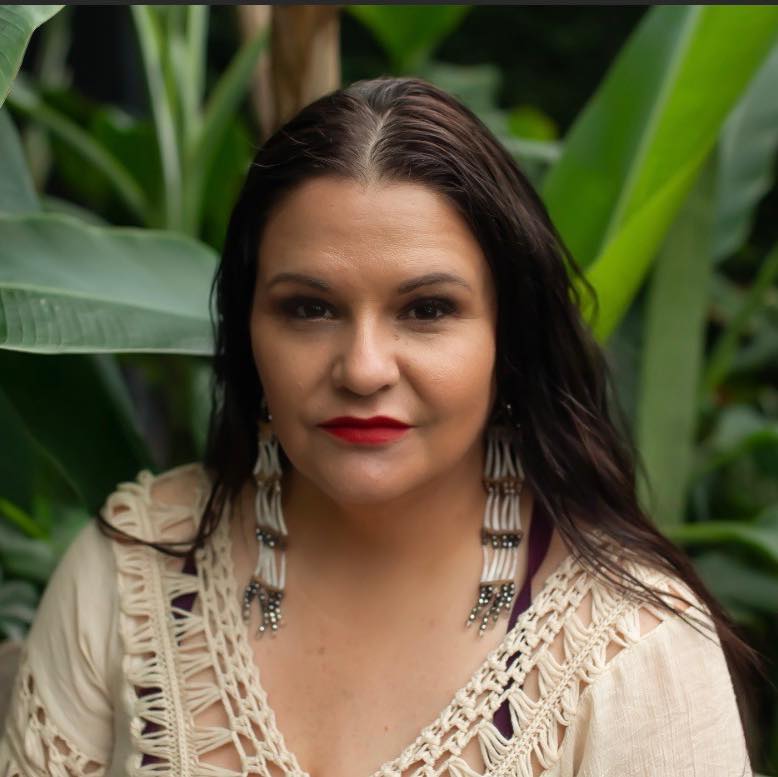
The Woven Project was established by Eriel Deranger, from Athabasca Chipewyan First Nation in northern Alberta, after she won the prestigious Climate Breakthrough Award in 2024. The organization awarded Deranger $4 million, the largest individual environmental climate prize that is given out globally.
Deranger, whose home community is down-stream from the Alberta tar sands and everyday lives with the impacts by pollution and climate change, has worked extensively for nearly two decades advocating for climate justice.
Over the past year, Deranger developed the Woven Project after witnessing gaps in Indigenous collaborations on global climate change solutions.
“It’s about weaving Indigenous knowledges together,” she told Ricochet Media in a telephone interview from Brazil.
“We often hear about weaving western and Indigenous knowledge together for different things, including climate strategies, but when we do this, we often create sort of a pan Indigeneity and we flatten the diversity of Indigenous Peoples cultures, regions, issues, and successes.”
The advisory council is made up of Indigenous climate leaders from the seven sociocultural regions of the world and is the first of its kind to focus solely on climate justice. The goal is to create climate solutions driven by Indigenous knowledge, culture, lifeways, all while being rooted in a rights-based framework to achieve land back for Indigenous Peoples, says Deranger.
“It’s like a colonial déjà vu. There is such great environmental change caused by the colonizers.”
She serves as the president of the Woven Project and founded Indigenous Climate Action in 2015, an Indigenous-led network working to develop climate solutions grounded in traditional knowledge, decolonization and community-based initiatives. But the Indigenous advisory council will unite Indigenous knowledge, culture and action in a way that’s never been done before.
The Woven Project aims to create a global gathering space for Indigenous peoples outside of COP venues to conduct needs assessments, strengthen kinships across movements, and center ceremony, culture, and celebration, says Deranger. This separate space addresses a critical gap in UN climate processes, where Indigenous peoples currently lack adequate time and support to align their strategies before arriving at fast-paced negotiating sessions where they’re pressured to work out complex issues in real time.
“(In doing this work) I’ve learned a lot of lessons. And some of those lessons are, when we spend too much time trying to respond and react to colonial policies, governments, legislation and bills, we take away from the capacity to build up the skills and the resiliency of our community to really lean into our culture, our lifeways, our languages, our practices on the land. Because we can spend all of our time trying to fight colonial systems, but we need to spend more time building our own communities up, and building and advancing sovereignty and self-determination,” she said.

Graeme Reed, who is of mixed Anishinaabe and European descent, works at the Assembly of First Nations as a senior policy advisor, ensuring federal and international climate policy safeguards First Nations rights, jurisdiction and knowledge.
Reed is the North American Indigenous representative of the Indigenous advisory council. He explains that the climate crisis is akin to the damages that colonization initially inflicted on Indigenous Peoples.
“(In North America) there are drought and water shortages, fires, thawing, sea level rise and it’s impacting our ability to exercise protocols, practices and cultural activities like hunting,” he told Ricochet Media via phone from Brazil.
“It’s like a colonial déjà vu. There is such great environmental change caused by the colonizers. When the Europeans first arrived here and the impacts we’re seeing as a result of climate change are very similar in nature.”
“In the U.S., there is a swift move to blatant fascism. And that fascism and that authoritarianism is actually occurring at a global scale.”
Graeme notes that alongside increasing environmental impacts around the world, a rapid bend toward authoritarianism and extractivism is causing further threats.
“In the U.S., there is a swift move to blatant fascism. And that fascism and that authoritarianism is actually occurring at a global scale,” he said.
“Not only are Indigenous Peoples navigating the accelerating impacts of a rapidly changing climate, but they’re also dealing with this geopolitical uncertainty that’s being caused as a result of fascist governments. The increasing wealth inequality; the role of multinational corporations in extracting from our lands and territories. So I think the opportunity in all of this is that, Indigenous Peoples, and the solidarity amongst Indigenous Peoples, can offer a tangible alternative to that path.”
Graeme says the tangible path would weave together shared stories of resilience, solidarity, and collaboration among Indigenous peoples to envision alternative futures. It focuses on strengthening how Indigenous communities strategically engage with nation-states while elevating the leadership and solutions already present in their communities.

Larissa Baldwin-Roberts, is a well-known climate activist and leader from Widjabul Wia-bal, Bundjalung Nations in so-called Australia. She represents the Pacific global region on the advisory council. She says severe heat, floods, fires, droughts and cyclones are heavily affecting her home territories and many Indigenous communities are facing displacement. The role of Indigenous Peoples voices in creating urgently needed climate solutions is critical, she says.
“The reality is our communities have been displaced and they’re continuing to be displaced,” she told Ricochet Media while attending COP30. “And then our government is pouring billions of dollars into fossil fuel subsidies and nothing into our frontline communities. It’s like a second colonial loss that we’re going through right now.”
But there are solutions, and many of them can be led by Indigenous Peoples, she adds.
Referencing incorporating the goal of land back into the work of the advisory council, she explains that Indigenous peoples view themselves as belonging to the land rather than owning it. When they advocate for land back, they’re calling for Indigenous cultures and sophisticated land management practices to be brought to the forefront. Indigenous communities in her territories are already implementing solutions like planting sea-grasses and conducting seasonal burns to prevent megafires, demonstrating millennia-old relationships with the land that offer vital climate solutions.
“The reality is our communities have been displaced and they’re continuing to be displaced. And then our government is pouring billions of dollars into fossil fuel subsidies and nothing into our frontline communities.”
“Land back is an idea around putting our culture and our people and our responsibility and obligation as Indigenous Peoples to the forefront. It’s not just about this idea of property rights and ‘give this land back to us,’ but it’s about the stewardship of Indigenous Peoples. And the reality is, the climate crisis is caused by colonization, overwhelmingly right across the world, where we see these incredible biodiversity regions that are struggling under the pollution. Land back is a regeneration of these spaces.”
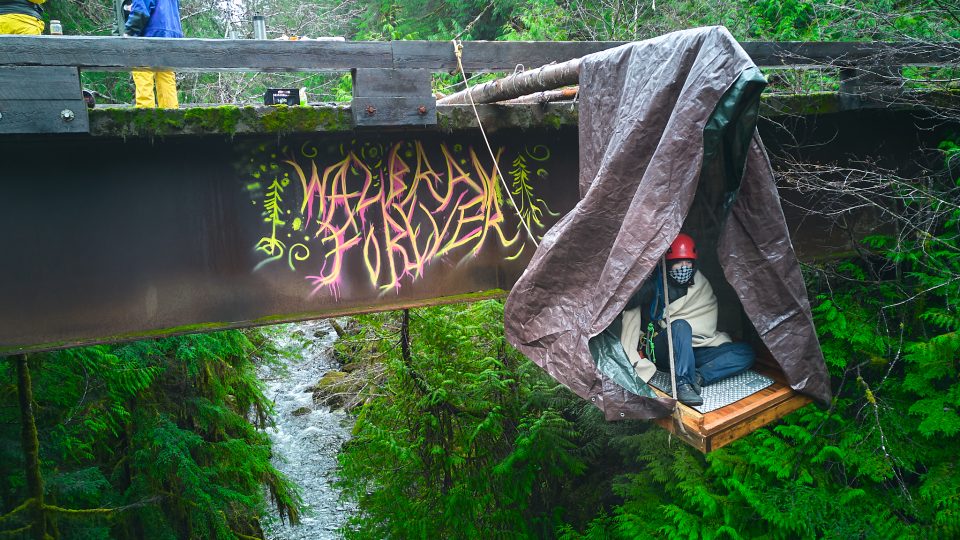
Deranger emphasizes the Woven Project will also address the urgent need to advocate for Indigenous land defenders worldwide who face violence and death while protecting their territories. She argues that if international laws were created to recognize and protect land defenders as essential allies in the climate fight, they could safely continue their crucial work combating land loss, addressing climate change, and healing ecosystems.
“We are hoping that if we can quantify and demonstrate the power of the Indigenous land defence movement, that we can move the narrative and change the narrative from criminals and protestors to land defenders and climate solution drivers,” said Deranger. “Additionally, to that, we can also make room and quantify our lands, territories, and our rights-based framework to advance Indigenous rights, to have land back. And collectively as Indigenous Peoples, globally we are stronger.”
The Woven Project plans to host a global Indigenous conference on climate change in 2026 with dates TBA.