
Universal Basic Income, or UBI, a guaranteed fixed income available to all citizens through the federal government, has always been loath for Canada to consider.
It was piloted in Ontario in 2017 and studied in British Columbia in 2018. Neither went anywhere. Ontario Premier Doug Ford’s government ended the three-year pilot project in 2018, before the study reached its scheduled end.
In 2025, Bill S-206, the National Framework for a Guaranteed Livable Basic Income Act, was put forward in the Canadian Senate, but never made it beyond the second reading. The argument against UBI has always been that Canada’s existing welfare system is more than adequate for its citizens.
But UBI is not about welfare, social safety nets or cash grants, as its detractors claim. It is about promoting a universal and unconditional basic standard of living for everyone, regardless of their economic circumstances. Exactly the way Canada has designed its universal healthcare, primary education, and old-age benefits. It is about equality and the universality of human rights.
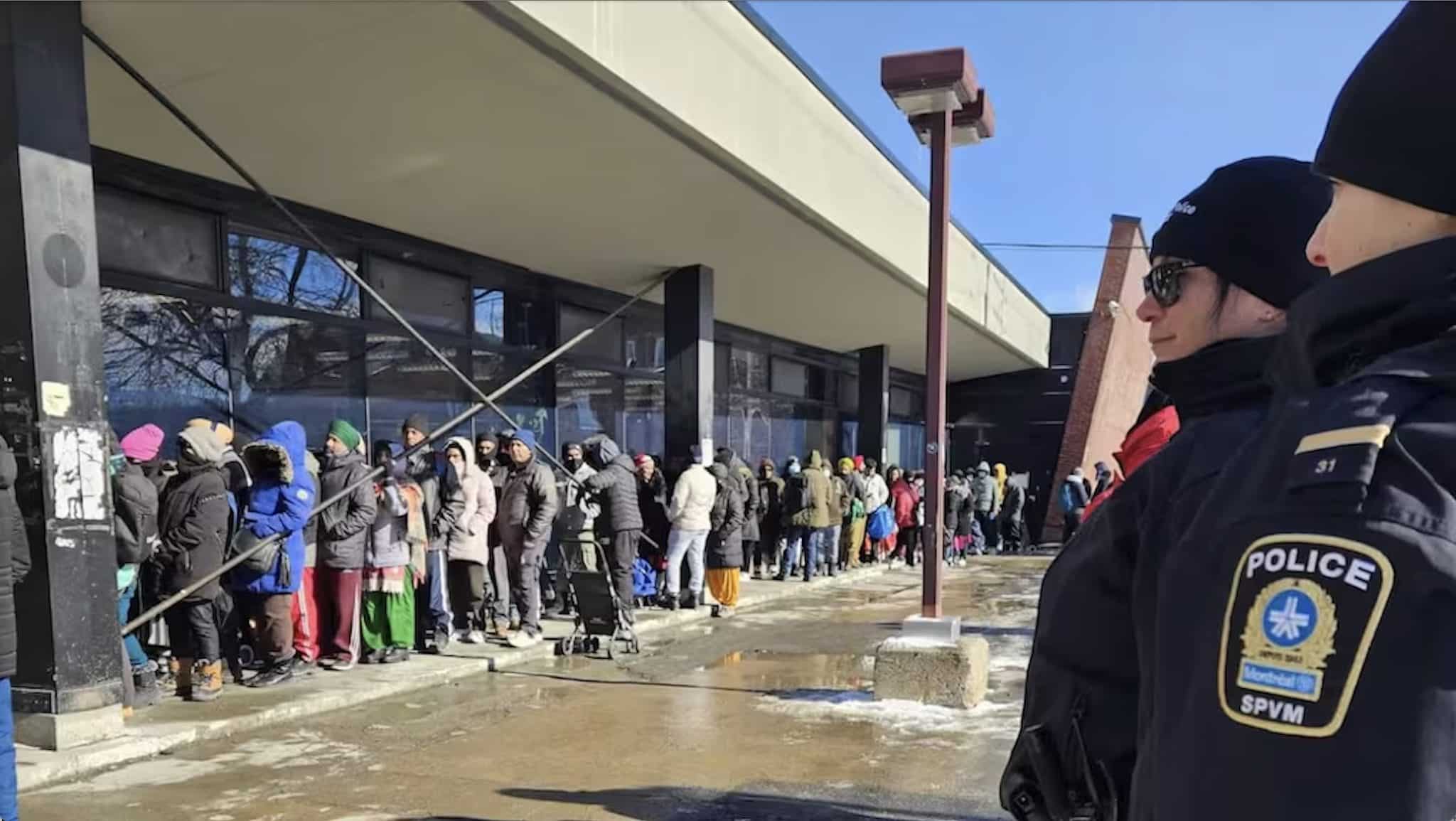
Poverty and inequality are no longer stereotypically confined to the Global South, where UBI has had its most supporters. It is very much becoming a part of Global North economies. In Canada, poverty rose from 9.9 per cent in 2023 to 11.1 per cent in 2024, per the latest available numbers.
It is about promoting a universal and unconditional basic standard of living for everyone, regardless of their economic circumstances. Exactly the way Canada has designed its universal healthcare, primary education, and old-age benefits.
According to Food Banks Canada, a quarter of households are food insecure, and the number of people who receive government support, but say that support is inadequate, rose from 45.9 per cent in 2023 to 66 per cent in 2026.
Working Canadians report feeling squeezed by high rents, unstable employment, and inadequate public supports, and are increasingly forced to turn to food banks to make ends meet.
Homelessness has spiked by a whopping 107 per cent between 2020 to 2026 and the income gap rose to 46.7 percentage points in 2025. Systemic inequalities continue to persist within Canada’s Indigenous communities where unemployment rates are higher than the national average.
According to the latest report of the National Advisory Council on Poverty, social assistance rates often leave Urban Indigenous People, Black Canadians and 2SLGBTQIA+ behind.
The ongoing affordability crisis must make Canadian policymakers start thinking beyond an ageist and racialized binary. The global economy is changing at a pace faster than most of us expected. The threat of mass automation and large language models are leading to early redundancies at one end, and the need to keep working beyond retirement to counter rising costs of living, at the other.
Regardless of what one earns, the right to shelter, food and water, is universal. It cannot be measured against employment, the nature of work and/or level of income. UBI is universal because it transcends the barriers of inequality that affords everyone a common sense of dignity. If we can offer universal healthcare, why can’t we offer a universal basic income?
Taxation still remains one of the more effective mechanisms of financing UBI… to redistribute that wealth to create equality, rather than inequality.
The real issue facing UBI then, isn’t and shouldn’t be, its merit. It is its financing mechanism. Providing a standardized (monthly or quarterly) income to a population the size of Canada, is a gargantuan task.
Taxation still remains one of the more effective mechanisms of financing UBI. This is where the argument to tax excessive wealth comes into play not just to hold a small group of people accountable, but to redistribute that wealth to create equality, rather than inequality.
Other modes of financing include rolling existing welfare and benefits, which are currently restricted by income and age, into UBI payments. For instance, the projected 2026-2027 federal budget for Old Age Security payments will total $88 billion, while young Canadians face rising unemployment and costs of living. Instead of creating sovereign wealth funds or using Canada Pension Plan investments for fossil fuel production, these monies can and should be redirected towards UBI.
Many questions about UBI still need to be answered; how much, how often, for whom, for how long, etc. The long-term outcomes of UBI are also yet unevidenced, mostly because it remains frowned upon as a socialist fantasy, not just in Canada, but globally. Some positive data is emerging. A UBI trial in Finland showed that participants’ mental health, financial security, and overall well-being drastically improved. Another example, the tiny Pacific island nation of the Marshall Islands rolled out an ambitious UBI program in December 2025 to all its 40,000 inhabitants, financed by the U.S.-funded Compact of Free Association financial assistance.
Why then are we so averse to something that could actually lead to greater economic productivity?
Canadians, like the rest of the world, do not have the luxury of waiting to see whether the global economy takes an uphill or downward turn. Canada is one of the wealthiest nations on Earth. It is time that we seriously consider Universal Basic Income to ensure all Canadians and future generations have the security of a dignified life.
Themrise Khan is an independent social policy professional and writer based in Ottawa.


