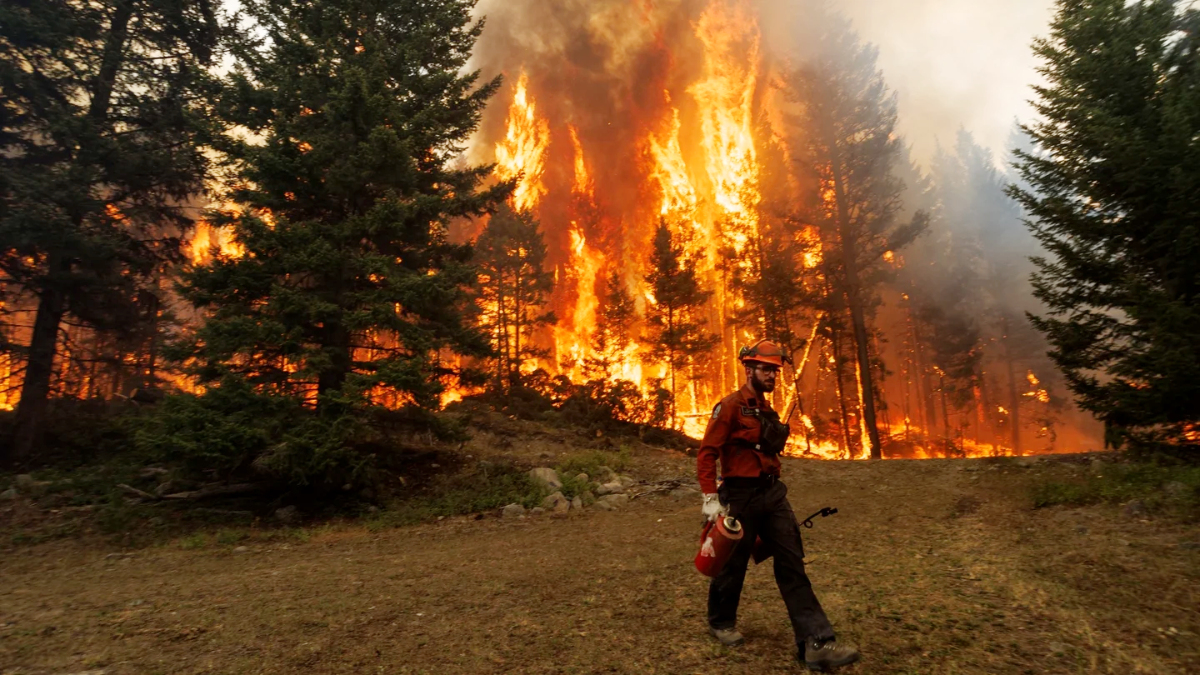
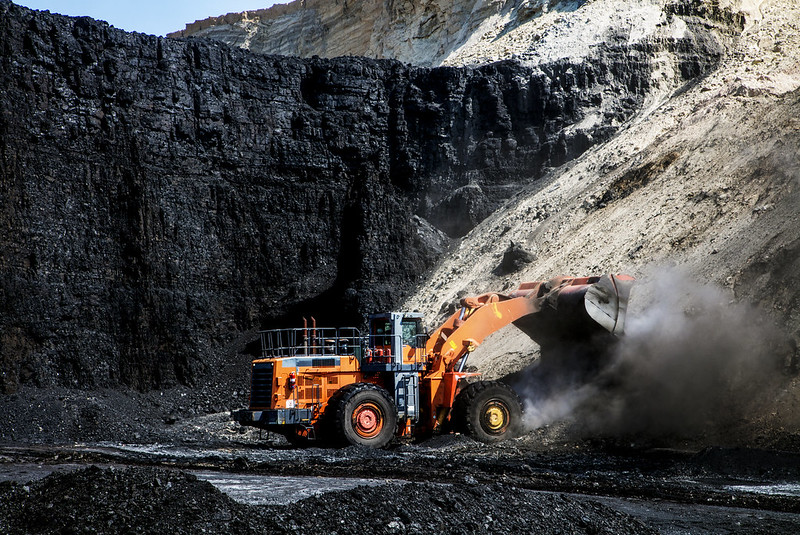
In the Yukon, Kaska Dena communities are bracing for big changes.
A new mining project is stoking fears that its approved location in caribou calving grounds will adversely impact the Finlayson herd, which has been a keystone source of their sustenance for thousands of years. The animal is listed as a ‘species of special concern’ in Canada’s Species at Risk Act.
“This land here, it’s our breadbasket and it’s always been full for us, always provided for us, and now we’re threatened with that mine. If the caribou disappear, I don’t know what we’ll do. We’ll have nothing. That’s our whole livelihood. Kaska Dena, they really rely on caribou for their food,” said Ann Maje Raider, executive director of the Liard Aboriginal Women’s Society.
Kudz Ze Kayah means ‘caribou country’ in the Dena language — the mine represents the latest threat to a traditional way of life that territorial and federal government policies have worked to erode for 75 years.
Vancouver-based BMC Minerals’s proposed zinc and silver mining project will be a massive open-pit and underground mine, named after the caribou it threatens. The Kudz Ze Kayah mine is being planned in the northern Pelly Mountains, 115 kilometres south of Ross River.
“This land here, it’s our breadbasket and it’s always been full for us, always provided for us, and now we’re threatened with that mine. If the caribou disappear, I don’t know what we’ll do.”
The company wants to extract 1.8 million tonnes of zinc, 350,000 tonnes of lead and 600,000 tonnes of copper deposits over 10 years. The Kaska people were not consulted on the potential impacts.
Most Kaska people live in the communities of Ross River, Watson Lake, Lower Post in southeastern Yukon, Good Hope Lake, and Fort Ware in northern British Columbia. Kaska Dena territory covers more than 24 million hectares and is about the size of Oregon — roughly 25 per cent of the Yukon.

That wasn’t by choice for the people of Tu Cho and Pelly Banks, since discriminatory federal and territorial policies challenged their traditional existence and sovereignty and forced them to abandon their lands.
Pelly Banks, just north of the camp, was, prior to 1951, known as Band 11 — it is now unrecognized. More than 70 years ago, the federal government dismantled it, forcibly amalgamating its members with another small band.
The community was decimated in the early 1950s when Indian agents told parents that they would either be heavily fined or jailed if they did not surrender their children to attend residential schools in either Lower Post B.C. or in Whitehorse, hundreds of kilometers away. Many parents chose to be near their children and moved from Pelly Lakes to Watson Lake, opening the subsequent argument for registry and census-takers in the 1950s that they were “nomadic” and few in number. The parents who remained suffered terrible loneliness, guilt, and depression.
The Laird Aboriginal Women’s Society (LAWS), along with former members and descendents of Pelly Banks, have expressed their opposition to the mine through an ongoing letter campaign to the Yukon government.
A significant part of their campaign has been a legal challenge, launched in 2024 by the Kaska, to which LAWS also contributed, arguing that a proper consultation was not done. During the same period, they began to revitalize the Tu Cho Institute for the Arts, Culture, and Wellness Centre.

Ricochet had the chance to tour the camp in late September and saw how the community is coming together to reconnect with language and culture.
In early 2023, LAWS received $4.2 million dollars to develop a cultural centre at Tu Cho – a traditional village and recreation site within Kaska Dena territory. The institute is a sacred gathering place deeply rooted in Kaska culture, heritage and ancestral connections, where Kaska people, service providers, and stakeholders benefit from advocacy programming and cultural teachings provided by LAWS.
“We can drink the water here. We can eat the fish here. The animals are plentiful. You can still live off the land over here, and without our land, we’re nothing.”
Major structural upgrades at the 25-year-old Institute represent a resurgence in Kaska Dena culture and a pushback against ongoing mining interests around the Yukon’s Ross River and Watson Lake. The camp sits along the banks of the westerly arm of wishbone-shaped Tu Cho (Frances Lake), a significant Kaska traditional and contemporary use area where the cabins of First Nations families have also stood for decades.
The gravel road leading into camp winds off the Robert Campbell Highway, roughly 100 kilometres north of Watson Lake. The highway, named for a 19th century colonial explorer, has been called Yukon’s Highway of Tears by Kaska Dena elders because of the way it opened the North to settler traders, prospectors, and later to mining companies.

In a covered seating area adjacent to the ‘old’ kitchen at the entrance to camp, a fire burns constantly in a metal, smoke-blackened barrel. On a grate on top, a kettle boils for tea and dishes. A pot of camp stew steams on the stove inside for any afternoon visitors who may stop by. Contracted tradesmen and community members are hoping to finish most of the major construction on the camp before the snow flies. The electrical hook-ups will have to wait until spring.
Thirteen new cabins have been constructed on the site, one for every full moon of the year. Impressive and built to withstand harsh Yukon winter weather, they rest in a semi-circle facing the new kitchen, a gathering hall and learning centre. Hewn from hand-peeled logs, they were delivered in kits ordered from Pioneer Log Homes, from Williams Lake B.C., then assembled on site. The camp’s older cabins sit along the road opposite the pebbled banks of Frances Lake. They’ve also had a makeover since flooding on the site in 2022 caused structural and mould damage.
On two sides of the smaller houses (Kōā), colourful murals have been painted by youth in the community through a partnership between Liard Aboriginal Women’s Society (LAWS) and the Youth of Today Society representing ancestors as well as culturally significant plants and animals — blueberry, eagle, bear and salmon. Each of the cabins, new and old, has a woodstove.
On a brisk autumn day, Maje Raider was out checking on the construction while receiving a delivery of meat that will feed the workers. As the wind picked up over the lake, she offered visitors a tour. She’s most excited about the dining hall and octagonal cultural learning building; she says will be dedicated to her late sister, Mary Maje. Mary, a Crow Clan member of the Ross River Dena Council, was the former President of LAWS and, along with the late elder Leda Jules, who was a strong advocate for Dena language and self-governance.

Funding for the current build flowed following flooding in 2022 through the federal Indigenous Community Infrastructure Fund at Indigenous Services Canada. Supplementary funding was also received in 2025 from the Pathways to Safe Indigenous Communities program at ISC, and funding came through to build a greenhouse to cover a series of raised-box planters at the edge of the camp from the Indigenous People’s Resilience Fund: Food Sovereignty Bundle.
The greenhouse will allow community members to grow vegetables over an extended summer season. “Food security is so important for us,” says Maje Raider as she looks across the boxes filled with rich, dark earth, all ready to be planted next year.
It will also allow people to be at the camp for uninterrupted periods of time. She’s hoping people will come and stay from May to September. “You gotta get away to camp for more than two weeks. You have to live out here. You have to really live it,” she says.
Though LAWS has been operating language, culture, and violence-prevention camps in various forms at the site for 25 years, it’s Maje Raider’s hope that the renovations and new amenities will help preserve the Kaska language and culture in an area where Indian Residential Schools (IRSs) and colonial government policies have devastated communities.
Maje Raider says she also hopes that people’s continued presence there will give them additional leverage in consultation opportunities, specifically when it comes to mining projects like BMC’s Kudz Ze Kayah mine, which have proved overwhelmingly destructive, especially how it threatens traditional ways, and specifically the danger that industry represents to Indigenous women.
The territory has seen multiple projects fail over the years — Faro, Wolverine, Mount Nansen and Eagle Mines.

A 2021 report titled Never Until Now: Indigenous and Racialized Women’s Experiences Working in Yukon and Northern British Columbia Mine Camps outlines the racialized and gendered impacts of the extractive sector in Yukon’s First Nations communities. It cites the Yukon Environmental Assessment Board’s framework for determining the adverse effects of projects assessed under YESSA and the National Inquiry into Missing and Murdered Indigenous Women’s 2019 findings that make clear the connections between the presence of itinerant man camps pose to women in Indigenous communities and the racialized and gender-based discrimination, harassment and sexual violence they face working on site in low-paid service jobs.
Maje Raider recounts when elder and mentor John Dickson described the pain felt by their forced removal. “We didn’t want to move because of our traplines. We had to live. That’s how we live, on our trapline,” he told her. He said Indian agents convinced them that the “flying machines” they’d taken their children in could crash, scaring people into moving down to Watson Lake and Lower Post to avoid that horrifying possibility. He told her they were promised houses and a cheque every month. “That was bullshit,” she said.
In a memo to W.S. Arneil Indian Commissioner of B.C. the Superintendent of the Yukon Indian Agency R.J. Meek writes “They [people of Pelly Banks] are quite nomadic living in the bush in the Pelly Banks area where their traplines are located.” In wording echoing Meeks a memo dated June 6, 1956 titled Regarding Bands and Reserves from Meeks to the Department of Indian Affairs suggested that smaller Indian Bands like Pelly Lakes be amalgamated (without their consent) with larger ones, citing the people’s “nomadic tendencies,” and the expectation that, if they lived closer to roads, the “Indians would more easily find jobs.”

When Band 11 was amalgamated, along with another small Nation, into Ross River Dena Council (RRDC) in 1956, Tu Cho (Frances Lake), Watson Lake, Nelson River, and Pelly Lakes were amalgamated into Liard First Nation in 1961.
RRDC council member Dorothy Smith, now 85, has been working to have the Band 11 decision reversed for decades. At 10 years old, Smith, along with other children from Pelly Banks, were taken by Indian agents by airplane, and then canvas-covered army trucks, to Mission Baptist school in Whitehorse. Others were taken to Lower Post Indian Residential School, one of the most notorious institutions in Canada’s history.
The Truth and Reconciliation Commission digital archive reveals the horrendous abuses that children suffered at the hands of school administrators and lay priests.
“They would bring all the kids to Lower Post… and our aunts, all their parents, they would make rafts, and they would raft down to Lower Post to be closer to their to their children.”
Against this dark, colonial past, LAWS’s camp provides a place of safety, community and cultural continuity on ancestral lands that the territorial and federal policies worked to destroy. “Whenever I look at participant evaluations over the past 20 years, the one phrase that always comes up is a sense of belonging. That’s what everybody says about camp,” said Maje Raider.
Alexis Spencer says she’s proof of that sense of belonging. “I grew up down south in Vancouver, so I never really got to connect with my mom’s people and the land, so I’m learning everything. I moved up here so I can be closer with the language.” She’s been learning the Kaska language since 2023 and training to teach it for more than a year. Spencer moved from Vancouver to Lower Post in 2024 where her “mother and grandmother’s people live.”
“Getting to know my culture is such a great opportunity and experience for me, because I was feeling very disconnected. Not anymore,” she told Ricochet.
She described the UBC-funded land-based language camp she visited there.
“If First Nations weren’t properly consulted, they need to be,” said BMC Minerals vice president Allen Nixon.
“We had 50 people here, elders in cabins, some younger people in wall tents, children. It was just like a little village. We had cooks and we were just all helping each other out, taking care of each other, telling stories. People would come in just to give us game, like rabbits, and we had fish every day. It was great to just mingle with other Dena and enjoy ourselves on the land, just as our ancestors would have, the same feeling, except with new commodities, trucks, and generators.”
Kaska teacher Diana Lee Jimmy (Wolf Clan from Tu Cho) also has ancestral roots around the camp. The connection between language and land is one Jimmy sees as inherent to cultural and emotional recovery for those caught in the wake of the IRS system.
“My family used to live out here. Places like this really mean it’s a homecoming for a lot of us who weren’t raised in this way anymore.” She is the daughter of a Lower Post residential school survivor. Her mother, born in 1940, was one of the first groups of students to go to Lower Post. Her mother’s absence from her people was “all it took for intergenerational transmission of the language to end in my family,” says Jimmy. Her mother’s older siblings could still speak and understand their language, but their kids all ended up going there [Lower Post] too.”
Lower Post school was operated by the Catholic Missionary Oblates of Mary Immaculate (OMI) from 1951 to 1975. The Missionary Oblates administered 57 of the 139 schools within the Indian Residential School system throughout Canada.

Paul Ceasar-Jules, Leda Jules’ grandson told Ricochet, “The history of that is just kind of devastating, because I grew up in Watson Lake. Every summer, my grandparents have come out here to spend the whole summer here, and they would always call this their home.” He nods in the direction of their cabin. “I remember saying a prayer by her cabin once and, as I finished, a huge freaking eagle from one of the tops of the trees moved down and went gliding along the water right in front of me and then it just flew away.”
Paul, now a Kaska language teacher, once had a job digitizing cassette tapes of Tu Cho language speakers. As he became more proficient, he realized he was listening to the stories of IRS survivors,” he said. “Over time, I learned, and I could understand a lot of things, and there was a lot of stories about Frances Lake and how, when they started the residential school, they would bring all the kids to Lower Post… and our aunts, all their parents, they would make rafts, and they would raft down to Lower Post to be closer to their to their children.”
Jimmy said the land is directly connected to their way of life and their survival.
“Places like this, where we can come and learn to be on the land, learn from elders, learn our language, and have the opportunity to be employed to learn our language is so important because so much of our language holds our way of knowing and being and living on the land. Having opportunities to be in places like this, to gather with other speakers and learners is invaluable,” Jimmy said.
“We can drink the water here. We can eat the fish here. The animals are plentiful. You can still live off the land over here, and without our land, we’re nothing.”
The prospect of BMC’s Kudz Ze Kayah mine hangs over all of that, access to the land, preservation of the caribou, and maintaining clean water.

Surveys studying the population size of the at-risk Finlayson caribou herd have been paid for and completed by invested corporations, not the government.
However, the government has been aware of the impacts and the risks. According to government briefing notes prepared for Question Period in 2022, First Nations were “objecting to the approval of the project due to concerns regarding the project’s impacts on caribou, as well as concerns about cumulative effects and impacts on their Aboriginal rights and interests.”
The Finlayson caribou herd’s winter range is north of the Pelly Mountains and east of the community of Ross River, on both the north and south sides of the Robert Campbell Highway.

A 2017 survey of the Finlayson herd population, funded by BMC, was not made public for the duration of the YESAB First Nations consultation period. It was only released prior to a second herd survey done in 2022, also funded by BMC. That survey admits the population size of 3,085 animals is “possibly an overestimate.” A 2007 survey, paid for by Yukon Zinc (Wolverine Mine), put that number at 3,077. The government and BMC concluded that these findings are “indicative of herd growth.” In both reports, the authors “acknowledge the Kaska Dena First Nations in whose traditional territory this work took place.”
Dorothy Smith told Ricochet that hunters in her community were no longer allowed to hunt on the greater BMC site in the Geona Valley. “We can’t go up there anymore. The road is blocked; it’s gated.”
Smith’s people who have hunted around Pelly Banks and Frances Lake for millennia are now would-be trespassers on their own ancestral hunting grounds.
“We need the land. We need clean land and water to survive. We get fish right out of Frances Lake and if they pollute the water there won’t be any fish, or grouse and ducks, anything. That’s the people’s food.”
In an interview, BMC vice president Allen Nixon told Ricochet that the company has heard the concerns from the surrounding communities and is responding.
“Kaska can access their traditional territories for hunting, but not via the project’s access road,” Nixon said. “The road is currently permitted to be a private and gated road as per negotiations between the Yukon Government and Kaska when the road was permitted over 20 years ago.”
Nixon said that new resource road regulations will allow anyone to apply to use the road and become a secondary permit holder (including Kaska) but regulations for those permits “will be decided by the Yukon government.” However, the road access application requires applicants to be operators within the resource sector.
“We need the land. We need clean land and water to survive. We get fish right out of Frances Lake and if they pollute the water there won’t be any fish, or grouse and ducks, anything. That’s the people’s food.”
The court agreed in December 2024 that governments had fulfilled their consultation duty, except for that one instance. Nixon said “the Court of Appeal came back and said ‘we agree, you weren’t consulted on the economic viability of the project.’”
“Fair enough,” said Nixon, “If First Nations weren’t properly consulted, they need to be.”
That consultation is still underway.
Once a decision document is re-issued, he said, BCM will re-start the permitting process focussing on the quartz mining licence and its Type A water licence. “We expect it will take another 12 to 18 months to secure those permits. Once we have the permits our board will make a final investment decision, and if that is positive then we will look to begin construction,” Nixon told Ricochet via email.
The Yukon government’s valoration of a mining project includes reclamation costs, and the costs of restoring land disturbed by mining activities. Victoria Gold Corp’s financial security for its project is $48.7 million, which acts as an insurance deposit should there be a leak, but the taxpayer price tag for cleaning up a collapse at its leach heap facility that released hundreds of millions of cyanide solution into the environment in 2024 stood at $200 million, as of June this year.

Smith points out Yukon’s history of failed mines going back decades.
“You can’t mitigate the destruction of the land,” she said. “They don’t even ask for the amount of money it ends up costing the Yukon government to clean them [the mines] up.”
Nixon said he’s hopeful the mine will get the final approvals it requires so they can begin construction sometime in 2026.
“We expect there’ll be some new terms and conditions in the decision document. That’s fine. And then once we have that, we can restart the permitting process.
“After YESAB (Yukon Environmental Assessment Board), the only outstanding question is the financial viability of the project. Under the caretaker conventions.”
He may have an ally in newly elected Premier Currie Dixon of the Yukon Party. In his victory speech on November 3, he said, “The Yukon government should no longer be an impediment to the growth of the private sector. It should create the conditions for growth, focus on doing what governments do well, and get out of the way of private industry.”
Mining companies in Kaska territory have a history of filing for bankruptcy and leaving unpaid environmental remediation bills to the Yukon Government.
Faro Mine, near the town of Faro in the territories of the Ross River Dena Council and Liard First Nation, was once the largest open pit lead-zinc mine in the world. It was abandoned in 1998, leaving 70 million tonnes of tailings and 320 million tonnes of waste rock. In 2018, the governments of Canada and the Yukon assumed responsibility for its remediation through the Northern Abandoned Mine Reclamation Program. After just four years of operation, Yukon Zinc Corporation abandoned its Wolverine mine, located between Watson Lake and Ross River. The company declared bankruptcy in 2015, leaving the Yukon government and taxpayers on the hook to pay most of its $2 billion-dollar environmental remediation bill. Yukon Zinc Co. went into receivership in 2019.

Last year, the government issued a statement about suspected leakage in the mine’s tailings storage facility, indicating that water “with ‘elevated levels’ of zinc, cadmium, selenium and cyanide had been released into the environment.”
In his case study on challenges associated with the water treatment remediation of the Faro and Wolverine mines, geologist David K. Rainey stated that “during implementation of water treatment for the interim period before remediation implementation, it is commonly discovered that geochemical conditions have deteriorated to a point where assumptions upon which the remediation plans are based, become obsolete.”
Rainey’s work stands as a criticism and warning for a region with a history of costly abandoned mines and failed remediation.
Two mineral deposits (ABM and Krakatoa) give BMCs Kudz Ze Kayah footprint a crescent shape, flanked to the north and south by the Fault Creek Fault and the Northwest Fault. Like Yukon Zinc, BMC will use a geosynthetic liner to secure its Tailing’s Storage Facility.
The project was approved by the Yukon Water Board when it was in the hands of Teck Resources. BMC purchased Kudz Ze Kayah from Teck Resources in 2016. Through the license, Teck was granted permission to divert two creeks and a dam (the Geona). Teck was granted permission to drain Geona Lakes by pumping water into Geona Creek and to withdraw 6,300 cubic metres or 6.3 million litres of water per day from the creek during operations. BMC is now in the re-application process since that license expired in 2018.
Smith is worried about potential downstream impacts of the mine on connected regional waterbodies. “The contamination will be running into the creek there where the mine is and its going to flow into Finlayson and then into Frances Lake and from Frances lake into the Liard river and into the Mackenzie, all the way down.”
When she learns BMC is using a dry stacking process rather than a tailing’s pond, she said “The dust is going to blow around. The wind always blows in the mountains.”
Nixon says the Water Board has indicated to BMC they’ve already completed their consultation for the public comment period on their application, which will now go to a public hearing.
Without access to their traditional berry-picking, trapping, and hunting grounds, as well as control over water sources above Fraser Lake, Smith says, it’s like she’s blocked from going to her own local grocery store.
Erika Gilson, whose father is a survivor of Lower Post residential school, told Ricochet that “it goes beyond that. This is about economic assimilation that extinguishes our rights to our culture.”