It’s a chilly evening in February in Edmonton, Alberta. Minus three on the thermometer. On the city’s north side, across from the former Rexall Place — an arena that once housed thousands of people for hockey games and concerts — stands a temporary shelter capable of housing 100 people. The Maskokamik Lodge (formerly the Coliseum Inn) is run by Enoch Cree Nation, and opened in January 2024 in response to the spiraling crisis of homelessness in the city.
Standing outside the shelter doors, 19-year-old Merrick is wearing a black winter jacket and black toque pulled over his shoulder-length brown hair as he shifts his weight from foot to foot to keep warm. He clutches a coffee given to him inside the shelter, and hopes to scrounge a cigarette off one of the dozen people huddled nearby. It’s a longshot, but the rush of nicotine will momentarily ease his worries.
“Everyone is just at each other’s throats for no reason,” he explains, of the way things are on the streets.
“We’re all sailing in the same direction. We all want out. We all want freedom. But everyone’s at each other’s throats.”


Merrick is Cree and a member of the Saddle Lake Cree Nation, although he’s never lived on the reserve, Edmonton has always been his home. He’s chatty and open about his life, sharing freely about the deplorable realities he’s faced. At age 16 he began living in tents with his father and sister. They’d move from time to time to avoid being caught and fined by authorities. It was literal survival out there, he explains — they never knew where they’d find their next meal, or how often they’d find a place to shower.
Nights were filled with terrors of the unknown. One memory is forever etched into his mind.
“I woke up to my dad staring outside the tent with his machete in his lap, sitting there listening. He said, ‘Shh. Something’s out there. I can see him standing right there, watching us.’ I stayed up until sunrise. I just sat there.”
Merrick and his sister wanted to stay with their father, who struggled with addictions, and not go into the child welfare system. So, they never told anyone about their situation, including extended relatives.
Now, Merrick is on his own. It’s been over a year since he spoke with his father, in fact, he doesn’t even know where his father is living. He’s worried about him because he is sick. He says he’s tried to find him, to no avail.
“He (my dad) has colon cancer. He can’t go outside. He’s in pain constantly. He can’t walk too far without having to use the washroom. He can’t go to appointments. He has warrants so he can’t get the help he needs from anyone. He’s completely alone. He’s about 50 now.”
And his little sister is struggling somewhere on the streets of Edmonton.
“She shoots up fentanyl. I don’t even know if she’s alive,” he says with a distant stare, now seated in a booth at the Tim Horton’s across the street where he spends much of his time.
“I feel alone. All the time. I know this is a pile of shit. I know I’m stuck in it, but I want to get out.”

Edmonton’s homelessness crisis has reached a breaking point. The number of people living without stable housing surged to 4,697 in September 2024 — a 47 per cent increase in a single year and the highest figure recorded in at least five years according to data from Homeward Trust Edmonton. Of those, more than 1,100 people had no shelter whatsoever. The crisis is falling hardest on Indigenous Edmontonians, who make up just over six per cent of the city’s general population but account for 60 per cent of its homeless population. Despite the City of Edmonton spending nearly $92 million on homelessness initiatives in 2024 and removing close to 9,500 encampments — a 40 per cent jump from the year prior — advocates warn that clearing camps without providing housing simply moves people from one street corner to the next.
The weather in Edmonton drops quickly, the cold is not just cold — it is a weapon. It moves through sleeping bags, cardboard, and the thin walls of tents. On Boyle Street and Jasper Avenue East, in the doorways and the ravine paths and the lanes behind the drop-ins, people in layers of filthy blankets move slowly or don’t move at all. The air smells of small smoking fires, urine, and the chemical sweetness of fentanyl. There are needles on the ground, and bottles, and sometimes a person, who is sometimes hard to distinguish from a pile of clothes.
“Prior to first contact, Indigenous people on Turtle Island were never unhoused. Ever. We lived on this continent for thousands and thousands of years and no human being was ever unhoused. That’s a colonial system.”
Judith Gale comes here several times a week with her volunteers, her food, and her bottomless, furious love.
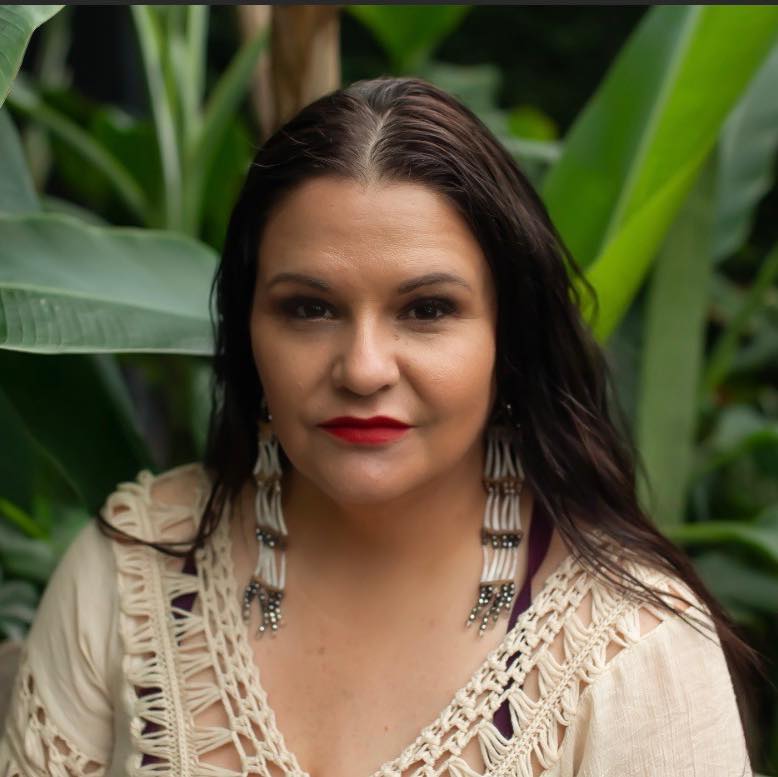
She is five-foot-two on a good day. She has a laugh that arrives without warning and a voice that can stop a police officer mid-stride from across a parking lot. People on the street call her Judy. They call her Mama Bear. When she walks through the blocks around the Bissell Centre or the Hope Mission, people come to her — shuffling, limping, weeping, numb. She knows their names. She knows their mothers’ names. She knows who has been missing for three days and who has been missing for six months and what the difference usually means.
“Our women, they get lost on the street,” she says. “And no one seems to care.”
Gale is 60-years-old and the founder of Bear Claw Beaver Hills House, an Indigenous-led street outreach organization she has run for the past six years on donations, force of will, and very little else. She and her volunteers go out into the cold and the dark and feed people, hand out supplies, and offer the kind of comfort that cannot be programmed into a government service.
Because Gale, who is Dene and Cree, has lived every part of it.
She was taken from her family at six months old, a child of the Sixties Scoop, moved around the Northwest Territories to whatever home had a spare room. She ended up in residential school. At seven, she was adopted by a single woman in Montreal — “a horrible, horrible human being,” Gale says, without flinching — who sexually assaulted her and the other children she had taken in. Gale started running at eleven. By 12 she was living on the streets of Montreal.

She made her way eventually to Alberta, the way many young Indigenous women do — following the faint promise of something better or simply following the road. By nineteen she was being trafficked between Edmonton and Calgary, working the stroll on High Track.
“I had a pimp,” she says plainly. “You can’t come back unless you got $500 a day. I had to stay out there until I had $500.”
She survived the “Pig Trail” era, when men were hunting women on the highways between Alberta cities and the bodies were turning up in fields and farms in Vancouver. A woman she didn’t know warned her away from a table one night at a bar in Calgary. She didn’t know, at the time, what she was being saved from. She knows now — it was notorious serial killer Robert Pickton and his brother.
“I just had to run,” she says of eventually escaping the trafficking. “I was tired of giving all my money up.”
She ran back to Edmonton where she met a man who was a drug dealer. Crack cocaine was in the house every day, and soon she began using. Then she was 30-years-old with two children fleeing an abusive partner, which landed her in a shelter. Soon Child and Family Services was at the door.
They took her kids.
“Less than 24 hours old,” she says of her daughter, the second child to be taken. “They said I could breastfeed, but I had to have security with me. I said, fuck you. I ran out of there in my hospital gown. I ran down the road with security following me. I got to a pay phone. I phoned my friend. Told him what happened. I just gave birth. They took my baby.”


What followed was a turning point in her life. She called lawyers for a week until she found one who told her to leave Edmonton, go somewhere small, somewhere she didn’t know any dealers, and tell the worker where she was going. The law would require the children to be sent to her.
“In one hour that lawyer had won my kids back. My daughter was six months old.” She pauses. “I never, ever had those fuckers in my life again. Never.”
She quit crack cocaine cold turkey. She moved to Slave Lake and didn’t look back.
“That scare was what pushed me out of addiction. Creator does things for a reason.”
Years passed. She rebuilt her life and raised her children. She eventually found her way to the John Humphrey Centre for Peace and Human Rights in Edmonton, working as a community development coordinator. When the pandemic ended her contract, she looked around and decided to go back to the streets. This time to help others.
The first year she got a grant. After that, it has been donations — a collection here, $200 there, $100 from someone else. “I go from moment to moment,” she says. “I don’t even know how I’m gonna pay my rent in March. That’s how we do it.”
Bear Claw has no government funding, no NDA, no institutional cushion. But to Gale, it works in her favour.
In 2023 alone, 301 people died in Edmonton as a direct result of homelessness — up from 200 the year before.
“We have nothing. So therefore, we can be a real voice — show exactly what’s going on out there. Be the eyes and ears for our brothers and sisters.”
What’s going on out there, in February, is this: People are sleeping in temperatures that can kill in hours. The City of Edmonton has a zero-tolerance policy on encampments. Police enforce it. Tents are slashed. Sleeping bags are confiscated. People are moved on to another street, again and again.
Gale doesn’t hold back in her response to this policy.
“Prior to first contact, Indigenous people on Turtle Island were never unhoused. Ever. We lived on this continent for thousands and thousands of years and no human being was ever unhoused. That’s a colonial system.” She leans forward. “And now the governments aren’t helping — they’re banning them from the places of last resort. Like these shelters.”
She opens her phone and shows a two-page list of women banned indefinitely from services. “Look at the names,” she says. “That ain’t no white people. Cardinals, Brunos. It’s all Indigenous.”
She describes watching the street community fracture over the years of aggressive enforcement. “Five years ago you could trust your brother or sister on the street. There was community. Now you see more people crying. Because anytime there’s a congregation of people, the police come in. Move on, move on, keep going. Nobody can have community anymore.”
When she believes police are being too rough with someone she knows, she says so. Loudly. She has no interest in being diplomatic about it.
“I had a sergeant tell me, ‘Judy, just let us play out our plan,'” she says. “To me it’s a genocide.”


There is a woman named Bobby Steinhauer who Gale has been looking for.
Bobby was one of the people she knew on the street — a small woman, beloved, whose addiction had become so consuming that her body had begun to betray her in visible ways. “So dependent,” Gale says, “that when she didn’t get it, her body would contort. To an outsider it would look like she had MS. But to the people who know her, it was because of drugs.”
Bobby has been missing for more than six months. Her head was half-shaved — marked by the gangs, Gale explains, to signal a debt. A life worth less than the money owed.
“The police are looking for Bobby,” Gale says. “They’re not gonna find her, unfortunately.”
She has heard things on the street, the way she always hears things. She does not repeat all of it. What she will say is that she believes Bobby is dead, and that she believes the river valley knows more than the police do.
She tells the story of a woman who came to her one summer morning, crawling, crying. The woman had been dragged to the river valley and gang raped. As she was climbing up the embankment, she grabbed what she thought was a stick.
“It was a human bone,” Gale says. “She says to me, ‘I bet you there’s lots of women down there, dead, buried.’ Because that’s what they do. They take them down there.”
Gale says it has gotten worse in the last five years. She has her own theory about why, one that connects the fentanyl supply chain to human trafficking to the number of bodies that are not being found. She says the dealers are never touched — “they never get busted, never” — while her brothers and sisters are policed, moved on, stripped of their shelters.
“Everybody knows who they are,” she says of the dealers. “Our police will harass our brothers and sisters. But they won’t harass the dealers.”


On a feeding night, Gale and her volunteers load vehicles with food and supplies and drive into the cold. Bear Claw sets up and word moves fast. People come. Some are coherent, some are not. Some are in the grinding misery of withdrawal, bodies shaking, eyes gone somewhere else.
Gale moves among them. She knows who needs what. She knows who to hold and who to give space to and who has not eaten since she was last here. She is fierce and tender in the same motion, which can be difficult to sustain.
“I’ve been in this life,” she says. “That’s how come my brothers and sisters — I understand them really well.”
She has a description of herself that she seems to have arrived at with some peace.
“I was a crackhead on the streets. I was sex trafficked here in Edmonton.”
She says it not with shame and not exactly with pride either, but with the particular authority of someone who knows that her history is the credential, the reason she is trusted, the reason people come to her in the cold and the dark rather than away from her.
“It’s a labour of love,” she says. “I go from moment to moment.”
Merrick lives moment to moment too.
“I had a sergeant tell me, ‘Judy, just let us play out our plan.’ To me it’s a genocide.”
He is back at the Maskokamik Lodge now, until he finds out if he can go back to the transitional housing apartment he was living at. A week ago, he yelled at a staff member during an altercation after he had been drinking alcohol — a vice he vows not to continue allowing to hold a grip on him. The apartment offers cheaper rent, three meals a day, and a roof over his head-it’s paid for by a social assistance cheque until he finds a job, but he wants to finish school first. It is more stability than he has had in years.
He has a lot of time to think here. Long nights in a room that is his, technically, but feels like a way station between one uncertain thing and the next. He fills the time reading, drawing, writing lyrics and playing guitar when he can get his hands on one.
Creating art is his outlet.
“Some people describe it as morbid,” he says of his art. “I describe it as honest.”
Merrick was born into a family already fracturing under the weight of things that had happened long before him. His parents separated when he was young. Both struggled with addiction. His father, a man who spent his childhood in foster care, carried wounds that had never been treated.
“He had no mom or father to teach him,” Merrick says. “He was in foster care all his life. So he got abused and abandoned. His attachment issues, he’s emotionally scarred. Mentally scarred.”
His mother was a different kind of absence. He does not call her his mom. “She never loved me. She never treated me like a son. I was more of a slave.” She would look at him and see his father’s face and punish him for it, he says. “You look like your dad. You sound like your dad. You’re gonna be just like your dad.” He heard it enough times that for a while he believed it. They convinced him his dad didn’t want him. They convinced him no one else did either.
What he learned instead was how to sit in a room and read it.
“When you have no friends, you got nobody to talk to, you just sit there and watch people growing up. You recognize patterns. You see how they act, how they react to certain things.”

The losses in his family came in clusters. His paternal grandmother was found dead in her apartment. She had been sick — cancer — and the landlord had refused to let anyone in. By the time they reached her, she had been alone for three or four days.
“She had no food or water,” Merrick says. “She was starving, dying of thirst. Dying in her own filth.” He pauses. “The landlord went in. Found her body.”
His father’s sister took her own life. And then his maternal grandmother — drunk, in the middle of a fight with his mother, also took her life.
“‘I’m gonna go home and hang myself now.’ And that’s what she did. Went to the garage, grabbed an extension cord.”
He was ten years old when someone else in the family died, his cousin. He remembers standing there when they told him.
“I stopped crying.” He looks at the table. “I don’t feel much emotion sometimes. When I feel it, I feel it hard. But sometimes I just… don’t.”
This is what intergenerational trauma looks like from the inside.
“It’s never just one thing,” he says. “It always piles up and adds onto each other. They’re all interconnected somehow.”
Merrick smiles brightly and gushes that he loved school when he went. He wants to finish Grade 12. He wants, eventually, to study botany.
“I want to get to the point where I’m able to play with the genetics and breed herbal plants, medicinal herbs we can grow at home. So, we don’t have to go to pharmaceuticals and get all those chemicals they feed us.”
He has already mapped out the family he wants to have someday, his dream is simply to become a good father.
But right now, he is nineteen and alone and the two people he is closest to in the world are somewhere in this city and he can’t find them. Finding his dad and sister is what keeps him up at night.
Merrick says he talks to God sometimes. Gets into arguments. And has good discussions, he says.
Outside the Maskokamik Lodge, Edmonton is doing what Edmonton does in February — pressing down cold and dark and indifferent on the thousands of people trying to survive it. The homeless people are getting younger, Merrick has noticed. He saw a girl recently who looked about fifteen, out on the street.
He shifts in his seat. Outside, the cold waits.
“Hope for the best,” he says. “Prepared for the worst. That’s all I got.”

Edmonton’s homeless count has more than tripled since late 2019, before the pandemic, driven by a pileup of systemic causes that have been building for decades.
It started when the federal government began withdrawing from public housing construction in the early 1990s — what University of Alberta human geography professor Damian Collins calls “the origins of Canada’s housing crisis.” Had federal funding continued at its late-1980s rate, more than 107,000 subsidized units could have been built across the country in the two decades that followed. Then came a pandemic, a cost-of-living crisis, a fentanyl epidemic, and mental health and addiction systems that were already overwhelmed. In 2023 alone, 301 people died in Edmonton as a direct result of homelessness — up from 200 the year before.
The City of Edmonton allocated nearly $91.9 million on homelessness-related initiatives in 2024. The provincial government has committed more than $430 million over 2024-2026. Federal dollars are flowing in as well, including a share of a $35-million two-year fund split across four cities and a separate $597-million Alberta-targeted stream.
And yet the federal Point-in-Time Count identified 3,902 people experiencing homelessness in Edmonton on a single day in October 2024 — the highest figure ever recorded for the city.Jim Gurnett of the Edmonton Coalition on Housing and Homelessness said in an interview with the CBC the response so far — tearing down encampments at record rates while the numbers keep climbing — is proof the approach isn’t working. “We have seen the biggest increase in people who are living in homelessness over this past year that I’ve seen in 25 years of being around this issue,” he said.
In an emailed statement to Ricochet the City of Edmonton notes its position on encampments is that “safety drives every decision”. Before any site is closed, it says, team members offer transportation to the provincial Navigation and Support Centre for shelter referrals and other services. From January 1 to January 31, 2026 alone, police received nearly 240 encampment complaints and removed approximately 144 structures. The City reports zero deaths at encampments this year and zero criminal charges laid by its Encampment Response Team.
The City of Edmonton progress report, released in July 2025, shows that of the 26 actions in its Homelessness and Housing Services Plan, nearly two-thirds remain in progress and four have not yet started. It acknowledges plainly that “there remains a significant gap in affordable housing availability” in Edmonton.The numbers tell the story bluntly. Homeward Trust’s most recent data estimates nearly 5,000 people are experiencing homelessness in Edmonton — the highest count on record. The shelters do not have them all, and the reasons why go beyond just capacity.

Edmonton’s own Point-in-Time Count found that the most common reasons people gave for not using shelters were fear for their safety, overcrowding, and concerns about bed bugs. Another 17 per cent reported being turned away because shelters were full. The Bissell Centre, with a capacity of 135 people, accommodated 187 on one January night and 230 the following night.
Public Interest Alberta has called on the province to declare a housing and shelter emergency, citing emergency shelters running at 94 per cent capacity, inhumane conditions, and rising rates of frostbite and amputation among those turned away.
The province disputes the picture. A spokesperson for Minister Jason Nixon told the CBC that statements that shelters are full or unsafe “discourage vulnerable Albertans from seeking critical supports.”
Meanwhile, the temperatures outside are dropping to -30. Somewhere on these streets, in a doorway or under a bridge or in a tent that may or may not still be there by morning, someone is trying to survive the night. Judith Gale will be back out here to bring food and supplies.
She will be looking, always, for the ones who have gone quiet.
“Our women, our brothers and sisters, they get lost on the street,” she says again. “And then their spirit diminishes. Every day.”

At a time when media concentration and disinformation threaten our democracy, trust has never mattered more. Ricochet remains accountable only to you — our readers. When you become a member, you’re investing in journalism that puts truth and the public interest above profit.
Now your investment into the future of independent journalism goes even further. In 2025, we were granted Registered Journalism Organization (RJO) status — one of just six English-language outlets that have earned that designation. That means when you donate to Ricochet, your contribution is now tax deductible. Join us!