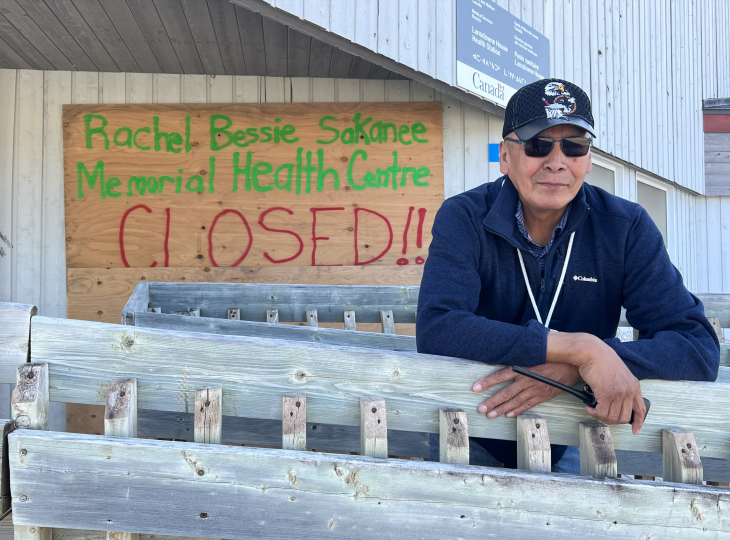
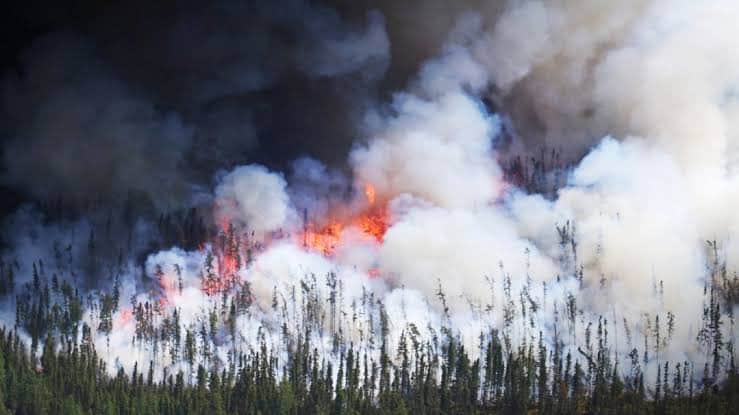
The fly-in Kitchenuhmaykoosib Inninuwug First Nation lost another home to fire over the weekend, as the Auditor General of Canada refuses to investigate allegations that the Canadian Human Rights Commission is “slow-walking” complaints over inequitable firefighting resources in northern Ontario First Nations.
The March 28 duplex fire in the community 600 kilometres north of Thunder Bay followed a house fire four days earlier that took the life of KI Chief Donny Morris’s three-year-old grandson.
On Friday, the Auditor General’s office refused a public call by the five-member Independent First Nations Alliance and KI, supported by the 49 chiefs of Nishnawbe Aski Nation to investigate why there has been no progress on an urgent claim they filed with CHRC seven months ago.
“Our office is not mandated to conduct investigations of the nature requested,” an Auditor General spokesperson said in a statement to Ricochet Media.
IFNA lawyer Julian Falconer says he submitted the official investigation request two hours after the Auditor General issued that statement.
“The risk of fires faced by Indigenous peoples in Canada is not an accident of geography or personal behaviour; it is the predictable result of systemic neglect.”
The request for the Auditor General to investigate cites the commission’s 15-month average wait time for complaint reviews, which has increased three months since 1998, when the Auditor General investigated and made recommendations to eliminate the backlog. The request goes on to suggest that federal budget constraints may delay access to justice even further, as the Commission is undergoing a 10 per cent workforce cut that will reduce the 283 full-time staff in 2024 to 254 by 2028.
It also points to findings over the Commission’s own racism. A 2023 Senate Standing Committee on Human Rights report found the Commission dismisses race-based complaints at a higher rate than other complaints. Meanwhile, it internally failed to “appoint, sponsor, support, and recruit Indigenous, Black and other racialized employees,” and allowed a “toxic” workplace climate of racist comments toward staff, while some racialized staff confided they live in “fear of reprisal” for speaking up.
Deadly fires, delayed justice
Lac Seul Chief Clifford Bull speaks for the IFNA communities. He says the way First Nations have been ignored through the complaint process is an extension of the human rights denial at the core of the Commission’s mandate.
“IFNA communities and KI warned the Commission that further fire-related fatalities were imminent if the complaint was not treated with urgency and without delay,” Bull says.
“We have been clear: lives are at risk if these conditions continue. We are condemning the Commission for failing to move this complaint forward in a timely way, given what is at stake. How many more of our children have to die before something is done about this? We want accountability.”

The original complaint filed last summer under Section 40 of Canadian Human Rights Act came in the wake of a 2016 fire in Pikangikum that killed nine members of the same family and the deaths of five-member family in KI in 2019. It cites coroner’s data that First Nations peoples in Canada are 10 times more likely to die in a fire than non-First Nations peoples, and that in Ontario, First Nations children under 10 years are 86 times more likely to die in a fire.
“The risk of fires faced by Indigenous peoples in Canada is not an accident of geography or personal behaviour; it is the predictable result of systemic neglect,” the claim reads. “Evidence, – much of it the respondent’s own – demonstrates and confirms that Indigenous peoples are dying and being harmed by fires disproportionately to other Canadians.”
The same communities filed a parallel case, simultaneously alleging systemic racism in paramedicine.
Having heard nothing by October 29, the First Nations requested a progress update. The Commission responded two days later, saying that making those sorts of requests could further delay results.

“We continue to triage and prioritize cases where the alleged discrimination is ongoing or severe. All cases are dealt with as efficiently as possible. The details of this complaint may result in faster or slower processing times,” the CHRC response reads. “We kindly request that you do not send multiple requests for status updates. Since we have limited staff to respond to each status update request, frequent request for status updates cause more delays in our process.”
Falconer called the response, “a callous disregard for the plight of Indigenous people in this country.”
“It’s a sign of what I would call a systemic failure and a serious malaise in the system. The absence of a triage system is proof positive that they are dysfunctional as an organization,” Falconer says. “When I refer to ‘the absence of a triage system,’ I say that because, God help them if they suggest that they did triage this and it was on the low end of ‘serious.’ The only explanation for this kind of treatment, seven months later – we still have no file number, we still have no intake worker – the only explanation is that it was triaged as ‘not serious’ in the face of a warning letter by legal counsel that lives are on the line.”
‘Trend’ of systemic racism complaints
In a statement to Ricochet Media, CRHC spokesperson Veronique Robitaille expressed sympathy for the family and KI over their recent loss, adding that inequitable funding and systemic racism complaints are forming a growing share of complaints the Commission is receiving.
“While we can’t comment on individual cases that are currently before the Commission, there is a trend of turning to the complaints system under the Canadian Human Rights Act to address underfunding of services on reserve, often when requests for adequate funding have been ignored,” she wrote.

“The problems we’re seeing are longstanding, serious and systemic. Climate change is making these challenges worse by increasing risks to housing, safety, and community well-being in First Nation communities. That’s why the Commission has long been calling for real, systemic changes to address the chronic lack of funding in First Nations communities.’’
Indigenous Services Minister Mandy Gull-Masty says she has reached out to the grieving Chief Morris and is, “on standby to engage when he is in a position to do so.” ISC has meanwhile provided $120,000 in new funding for mental health supports, plus $40,000 for fire prevention education, smoke and carbon monoxide alarms.
“Community priorities are guiding all efforts – both in preventative and responsive actions taken,” a statement from Gull-Masty’s office reads.
Systemic failures
As the case languishes to argue that inequitable resources are systemic and prejudicial, the day-to-day vigilant work continues.
Monique Belair is IFNA’s acting fire chief. She has 39 years of professional experience, including having led Kingston Fire & Rescue in eastern Ontario. She says volunteers are doing all they can but they need long-term, sustained funding that reflects the realities of extreme weather and the effects remote geography have on mutual aid, supply chains, and economies of scale.
“The problems we’re seeing are longstanding, serious and systemic. Climate change is making these challenges worse by increasing risks to housing, safety, and community well-being in First Nation communities.”
“I’ve seen what a fully-funded, legislated fire service looks like. It means predictable budgets, stable staffing, access to training and the infrastructure needed to meet national standards,” she said in a statement. “Since joining IFNA and working alongside IFNA member nations, I’ve seen a very different reality. Under the current funding model, First Nations communities are expected to meet similar standards, but are not provided with the same tools or resources.”
“Fire protection in First Nations communities must be built in partnerships with them, not imposed on them.”
Jon Thompson is a Local Journalism Initiative reporter based in Thunder Bay. Contact him with tips and story ideas at Jon@ricochet.media.