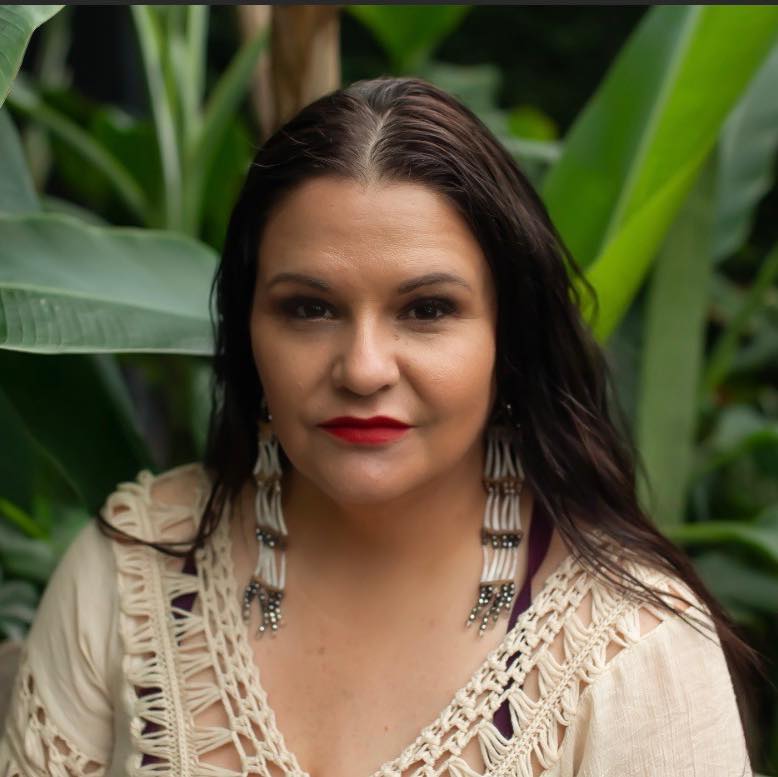
In a direct challenge to Canada’s constitutional framework, Alberta Premier Danielle Smith’s controversial Bill 54 has ignited fierce opposition from First Nations leaders across the province. Behind the scenes of this escalating political crisis stands Cara Currie-Hall, a seasoned political strategist from Montana First Nation in Maskwacis, who is coordinating an emergency response from Treaty Chiefs that could reshape Alberta’s political landscape.
Bill 54 would lower the threshold for citizen-led referendums in the province, paving the way for a vote on separatism.
‘A moment of opportunity’
Currie-Hall, who serves as chair for Treaty Chiefs in their meetings regarding Bill 54, describes the current situation as “a moment of opportunity” for First Nations to assert their treaty rights against what she characterizes as an existential threat.

“It’s very urgent,” Currie-Hall explained in an interview with Ricochet Media. “The chiefs came to make statements… there was representation from descendants of the signatures of Treaty 1 and Treaty 2. We had representation from Treaty 4 and Treaty 5 sitting in the room with us.”
At the heart of the controversy is Bill 54, legislation that critics say makes it dangerously easy for Alberta to separate from Canada. According to Brooks Arcand-Paul, NDP MLA for Edmonton-West Henday and a member of Alexander First Nation, the bill’s implications are profoundly troubling.
Arcand-Paul, a lawyer specializing in Indigenous law and litigation, who proudly identifies as a “treaty lawyer,” has been tracking the legislation closely. He notes that under the proposed amendments to the Citizen Initiative Act, the threshold for triggering a referendum has been drastically lowered to just 10 per cent of those who voted in the last general election.
“That’s 177,000 people that get to determine the fate of the province,” Arcand-Paul explained. “How are they turning this into separation without having a conversation with our Nation? Because this is all treaty land. They can’t just do that.”
Smith’s separatist connections
The controversy deepens with revelations about Premier Smith’s alignment with separatist organizations that have dismissed Indigenous rights entirely. Smith has expressed support for the Alberta Prosperity Project (APP), an organization advocating for Alberta independence that has taken concerning positions on Indigenous rights.
Smith said she takes the Alberta Prosperity Project “very seriously” even as the group promotes what DeSmog calls “conspiratorial claims about Indigenous rights.” Dennis Modry, the group’s CEO, has explicitly stated: “APP absolutely does not support UNDRIP. We don’t need a woke United Nations to ram down our throats their socialist, Marxist agenda.”
Smith and Modry appear to have a working relationship, with Smith saying during a leadership debate hosted by APP and Ezra Levant’s Rebel News that the pair share similar goals. “So part of when I decided I wanted to run [for Alberta premier], I knew how important it was to make sure that we addressed the issues of autonomy. And I talked to Dr. Modry as one of my first steps. I said, ‘let’s try this together.'”
Says one thing, does another
Currie-Hall offers a scathing assessment of the Premier’s approach, suggesting Smith is playing a dangerous political game with Treaty relationships.
“Danielle speaks through both sides of her tongue,” Currie-Hall stated. “She’s not somebody that can be trusted because she says one thing, does another, and she does it without skipping a beat, same breath.”
Currie-Hall describes Smith as a leader who communicates with conflicting messages to different audiences.
“She was the speaker at that dinner with the American Canada Business Council, and at that dinner they discussed the tariff war, and then talk of separation. But she said to that community, there will be no separation,” she said. “On one hand, she’s telling the Albertans she’s gonna separate, and she’s gonna go forward with her referendum. On the other hand, she’s telling the business community there is not gonna be separation.”
Resource extraction at the core
Behind all the political maneuvering lies the real issue at the core, which is control of Alberta’s vast natural resources. Both Currie-Hall and Arcand-Paul identify resource extraction and the Natural Resources Transfer Act (NRTA) as central to the conflict.
“The NRTA is all the resources. That’s Danielle’s ticket,” Currie-Hall explained. “She thinks she’s gonna do business with Donald Trump in America with our resources, but those resources do not rightfully belong to her, or Alberta. Those belong to the Treaty nations.”
Arcand-Paul also points to oil and gas resources as the impetus for Smith’s political strategy.
“I think basically what is driving this is that the big industry sectors want to keep making money, keep exploiting resources without any accountability.”
“My concern with that is that the UCP, if this referendum and separation comes, is they’re gonna dangle it in front of our faces,” he said. “They’re gonna put the little carrot like they do with every other little piecemeal of funding that they give to our nation. They’re gonna use it as a strategy, as a bargaining tool.”
The Treaty 8 First Nations Grand Chief Arthur Noskey echoed these concerns in comments to DeSmog, suggesting that corporate interests in the U.S. and Canada may be driving the separatist agenda.
“There’s no benefit to us,” Noskey told DeSmog’s Geoff Dembicki, predicting that the true winners of any successful sovereignty push would be resource companies that gain from fewer federal regulations. “I think basically what is driving this is that the big industry sectors want to keep making money, keep exploiting resources without any accountability.”
The urgency of the situation has prompted unprecedented unity among Treaty Chiefs.

According to Currie-Hall, the response was immediate and decisive when news of the Bill’s implications first circulated.
“This is an attack on our Treaty,” she recounted hearing from leaders across multiple provinces. “The immediate feedback was consistent… Treaty 6, 7, and 8, which is all of Alberta,” adding that First Nation leaders “need to take a firm stand against this Premier and we will stand with them.”
An emergency meeting of chiefs was called, hosted by Saddle Lake First Nation’s Chief Jason Whiskey Jack. “The chiefs were already gathering,” Currie-Hall explained, describing the atmosphere as “very calm, but very serious. The chiefs came in really clear. They were very focused.”
Legislative timeline and response
Arcand-Paul indicated that Bill 54 is moving quickly through the legislative process.
“We’re gonna probably go to committee tomorrow… but it will get passed by the end of the week,” he warned, adding that Smith is courting separatist support and has already signaled plans for a referendum as soon as next year. “She’s already planning for a 2026 referendum, like it’s happening and she is gearing up for it.”
In response, First Nations leaders are organizing on multiple fronts. Currie-Hall mentioned several upcoming events, including a rally at the legislature on Thursday and a Treaty conference being planned in Calgary with participation from legal experts including Matthew Coon Come, who led the Cree Nation’s successful opposition to Quebec’s separation in the 1990s.
The parallels to Quebec’s attempted separation are not lost on those involved. Currie-Hall highlighted the significance of the involvement of the Grand Council of Crees.
“The alliance that they brought in Matthew Coon Come and the Grand Council of Crees was really critical,” she said. “They knew how serious this was, and Matthew’s work is so extensive in confirming our right to self-determination.”

Back when Quebec was debating separating from Canada, Cree people stood their ground. “Canada exhausted all the legal avenues they could to fight Quebec. Quebec was at the door ready to secede. But the Cree said, ‘we have our own rights to self-determine, whether or not we’ll go with you, or whether or not we’ll stay in Canada.’”
Arcand-Paul emphasized similar legal principles. “The formula to amend the constitution will have to be followed through with,” he explained, referencing the Clarity Act of 2000. “There’s all the stipulations in that Act. One of them is the amount of people that have to show up for a referendum, but the other one is negotiation with First Nations and Indigenous people.”
As tensions escalate, both Currie-Hall and Arcand-Paul see this moment as transformative for Treaty relationships in Canada. The emergency meetings and rapid mobilization of First Nations leadership represent what Currie-Hall calls “a moment of opportunity to assert our rights and ourselves as Treaty nations.”
“That’s 177,000 people that get to determine the fate of the province… this is all treaty land. They can’t just do that.”
“So where do I think it’s going? I think it’s going forward very fast,” Currie-Hall predicted.
“As things have it, they’re not happening coincidentally. One, the chiefs recognized it was an emergency. They dropped everything they were doing to get in that room in dialogue together. They took action, they joined hands, joined their voices. They made a loud noise.”
Arcand-Paul struck a similarly defiant tone.
“The other part of this is that [Smith] needs unanimous consent from the legislature,” he stated. “You have two Indigenous people elected in the legislature in Alberta that are prepared to say no, and that is my story and I’m sticking to it. I will never allow for separation to happen because Alberta exists because of our treaties.”
The message from First Nations leaders is unequivocal: Alberta’s path forward cannot bypass treaty relationships. Arcand-Paul concluded, “It does not exist in spite of them. It exists because our treaties are here.”