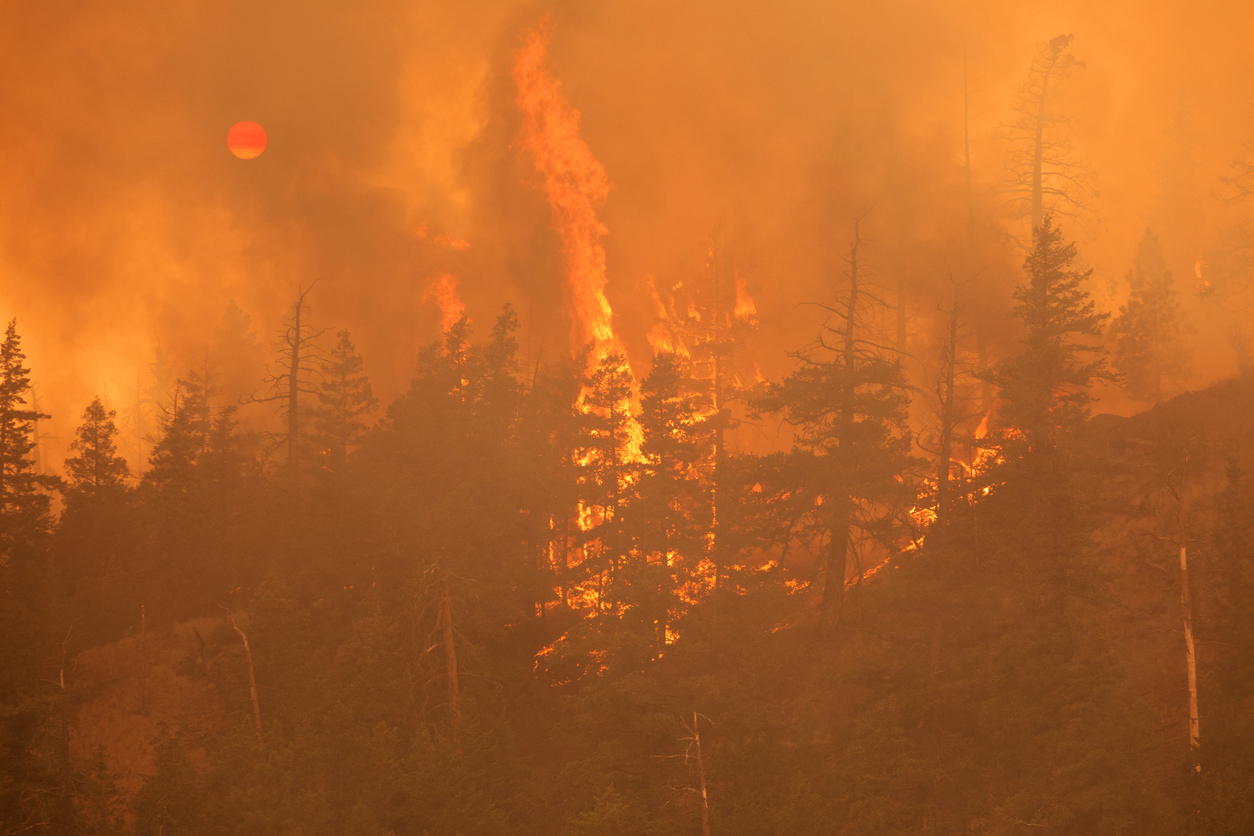

My daughter was born on the hottest day on record in British Columbia. June 28, 2021 shattered temperature records as a severe heat dome killed more than 600 people.
In the weeks that followed, the province burned. Wildfire smoke made it difficult to take my newborn outside. We spent those early months of her life doing what many new parents do: sitting at home, holding a baby, and watching a lot of news.
I saw extensive reporting on the heat, the fires and the smoke. But I kept noticing a troubling omission: the connection to climate change and, even more rarely, the burning of fossil fuels driving it.
How could the news not be making the connection between this dangerous weather and its cause?
The connection CBC keeps missing
That unsettling experience eventually led me, along with colleagues at Simon Fraser University’s Community-Engaged Research Initiative (CERi), as well as CBC audience members across the country, to undertake a community-engaged research project examining CBC’s climate reporting.
In 2023, we published Quiet Alarm: A Review of CBC’s Climate Reporting, based on two weeks of monitoring CBC’s flagship news programming.

One of our most concerning findings was that only nine per cent of climate stories made the connection to the burning of fossil fuels.
These findings were consistent with Re.Climate’s 2024 analysis of more than 803 Canadian national media stories on wildfires which found that only 13 per cent of wildfire stories explicitly connected fires to climate change.
Across stories mentioning climate change, just 10 per cent mentioned fossil fuels. Researchers concluded that although climate coverage has increased, it continues to lack crucial context about both causes and solutions.
In October 2024, as a response to these research projects, five distinguished former CBC broadcasters, including David Suzuki and Peter Mansbridge, publicly released an appeal to CBC News editor-in-chief Brodie Fenlon calling on the public broadcaster to treat the climate crisis with greater urgency.
And yet, three years after our original research, the problem persists.
During my recent interview with The Breach podcast, host Desmond Cole shared the results of the outlet’s informal review of 59 CBC stories during recent wildfire coverage. Only seven mentioned climate change, global warming or fossil fuels and most of those mentions came from interviewees rather than CBC journalists.
Canada has a climate literacy problem
This lack of contextual details matters because Canadians already have a serious climate literacy problem.
Re.Climate’s 2025 public opinion research found that less than half of Canadians (49 per cent) correctly identified burning fossil fuels as the main source of climate pollution, even when prompted with a list of possible answers.
And the trend is getting worse.
New Angus Reid Institute polling finds that just 59 per cent of Canadians now say climate change is mostly caused by human activity, down from 71 per cent in 2021. The proportion who consider climate change a “very serious” threat has fallen from 50 to 38 per cent over the same period.
At precisely the moment when the consequences of climate change are becoming harder to ignore, too many Canadians still do not understand what is causing it.
Journalism is not solely responsible for this decline. Canadians are navigating an information ecosystem shaped by decades of fossil-fuel industry advertising, lobbying, public relations and disinformation. Climate change has been so successfully politicized that simply naming its causes can be interpreted as taking a political position.
Context is not advocacy
But providing context is not advocacy. It is journalism.
Reporting that burning fossil fuels is the dominant cause of global warming is not taking a political position. And making these contextual pieces can be communicated in a sentence or two.
When journalism tells us what is happening without explaining why, it leaves an information vacuum.
That vacuum is easily filled by claims that wildfires are primarily about forest management or arson — two misinformation narratives Re.Climate has identified in Canadian wildfire discourse.
What the public broadcaster is for
I support the CBC. At a time of media consolidation, disappearing local journalism and rampant misinformation, Canada needs a strong public broadcaster. But public broadcasting comes with a responsibility to give people the information they need to understand their society and make informed democratic decisions.
Climate change cannot be confined to a specialized climate section or intermittent stories. It shapes housing, insurance, health, food prices, infrastructure, geopolitics, jobs and public spending. It is increasingly part of the context in which Canadians live their daily lives.
We need a daily climate report
CBC Radio One’s local morning programs routinely include sports and business reports alongside news, weather and traffic.
Why not a daily climate report?
A daily climate report on CBC’s flagship shows could tell Canadians about air quality, extreme-weather risks, emissions, climate policy and our progress toward national targets. More importantly, climate context should become routine across political, economic, health and disaster reporting.
If you share these concerns about CBC’s climate coverage, I invite you to join the growing letter-writing campaign calling on Canada’s public broadcaster to provide clearer, more consistent reporting on the causes of the climate crisis.
My daughter is five now. The extreme conditions into which she was born are no longer exceptional events. They are becoming part of the world in which her generation will grow up.
Canadians deserve to understand why.
Our public broadcaster has a responsibility to help us do that.
Tara Mahoney is director of research and engagement at Simon Fraser University’s Community-Engaged Research Initiative, critically examining media, public engagement, and climate literacy.


