As global leaders descend upon Canada for the G7 summit from June 15 to 17 in Kananaskis, Alberta, they will arrive to find a country in the midst of an Indigenous resistance uprising, which their meetings will no doubt entirely ignore. While they gather to discuss global trade, security, and energy, they will literally be sitting on Indigenous territories — yet not a single Indigenous voice will have a seat at their table.
The very ground beneath their feet belongs to peoples whose rights are under unprecedented assault across this nation, yet their perspectives on the future of this land and planet will be absent from every conversation, every decision, every handshake and photo opportunity.
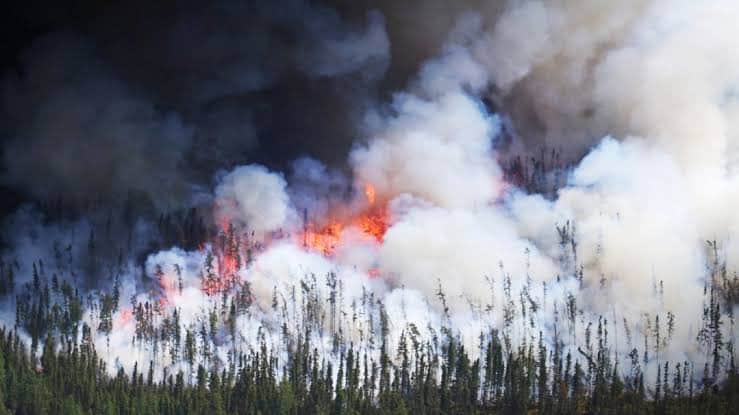
Meanwhile, as these world leaders prepare to meet, Canada is literally burning around them. More than 200 active wildfires are raging across the country — half of them completely out of control — with thick smoke choking the same province where G7 leaders will convene. The irony is suffocating, in more ways than one.
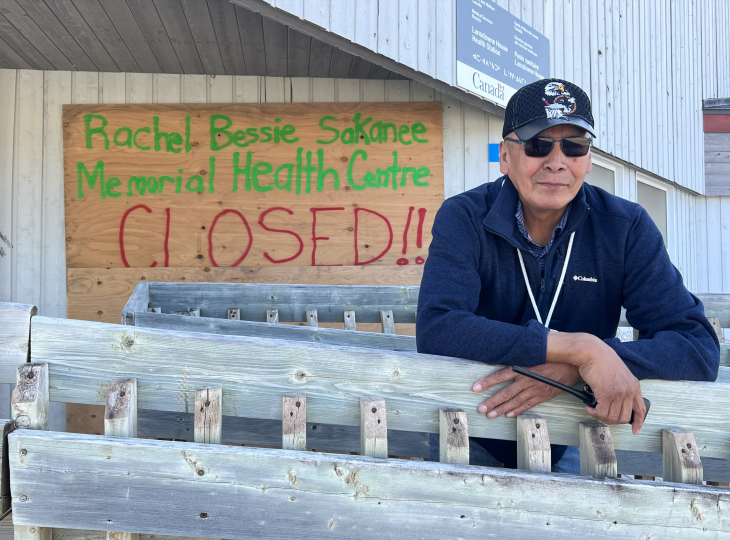
Indigenous communities are bearing the heaviest burden of this climate catastrophe. More than 30,000 Indigenous people have been forced from their homes in Manitoba, Saskatchewan, and Alberta alone — and fire season has only just begun. Thousands of our people are displaced across this burning country, evacuated from territories that have sustained them for millennia, while G7 leaders discuss global stability from their air-conditioned conference rooms.

Yet even as the smoke makes it difficult to breathe in Alberta, Premier Danielle Smith remains eager to sell off more Indigenous resources to U.S. President Donald Trump.
Where is the recognition that the unrelenting extraction and rape of Indigenous lands directly fuels the climate crisis forcing our people from their homes?
What these world leaders don’t realize — what Canada’s own government seems determined to ignore — is that they are arriving at a moment of reckoning.
From coast to coast, something is stirring. In Ontario, First Nations are preparing to blockade Highway 400 to protest Doug Ford’s Bill 5, legislation that creates “special economic zones” where Indigenous rights can simply be swept aside. Chief Shelly Moore-Frappier of Temagami First Nation hasn’t minced words: the highway will shut down. That’s not a threat — it’s a promise.
In Alberta, Chiefs are rejecting Premier Smith’s Bill 54, calling it what it is: a corporate land grab disguised as democracy. In British Columbia, First Nations leaders are mobilizing against Bill 15’s fast-track resource extraction plans with warnings of protests and litigation that could tie up projects for years.
Prime Minister Mark Carney sparked this resource frenzy with plans to expedite approvals for so-called “nation building” infrastructure projects, and his lead has been eagerly followed by premiers across the country. But this reversal on longstanding commitments to consultation and Indigenous rights has not gone unnoticed.
This isn’t scattered discontent. This is the emergence of the most coordinated, strategic Indigenous resurgence in years — and organizers are preparing for war. Traditional governance systems that have existed for millennia are activating networks of resistance that span the continent. Historical divisions are dissolving as Hereditary Chiefs stand with elected leaders, youth activists join hands with Elders, and legal strategies coordinate with direct action.
A pattern of erasure
Every single piece of legislation driving this fight has the same goal: to bypass free, prior, and informed consent. To steamroll over treaty rights. To clear the path for resources to be extracted and sold, as they always have been, without meaningful Indigenous participation in decisions regarding their own territories.
The connection between all these uprisings? It has always been about the land. The same land where G7 leaders will shake hands and sign agreements while ignoring the peoples who never ceded their sovereignty over it.

This is not a new story. This pattern has been repeating since Canada was established as a country — since the very first time someone decided they could take what wasn’t theirs without asking. What’s new is the scale and coordination of the response.
As G7 delegates discuss global challenges behind closed doors, they will be willfully blind to the storm building outside their conference rooms. Indigenous leaders I’ve spoken with aren’t making empty threats. They’re preparing for battle — sustained, strategic resistance that will make ignoring Indigenous rights too costly for any government or corporation to bear.
They’re organizing economic disruption campaigns that could shut down critical infrastructure. They’re launching legal challenges that could tie up resource projects for years. They’re building international advocacy networks that could severely damage Canada’s global reputation. And yes, they’re preparing direct action that will inevitably create confrontations that no amount of media spin can hide.
The absurdity of this moment cannot be overstated. World leaders will spend three days discussing the future of the global economy while excluding the voices of the peoples whose territories contain much of the resources that fuel that economy. They’ll talk about the climate crisis while ignoring the knowledge systems of peoples who have sustainably managed these lands for thousands of years. They’ll discuss international security while remaining oblivious to the growing instability their host country is creating through its systematic erasure of Indigenous rights.
The G7 will address global challenges while refusing to acknowledge that some of the most innovative and sustainable solutions might come from the Indigenous peoples they’re pretending don’t exist.

The reckoning
Here’s what these leaders need to understand: the Indigenous resistance happening across Canada isn’t going away. It’s not a temporary inconvenience that can be managed with better public relations or token consultations. This is a fundamental challenge to the colonial assumptions that still underpin how Canada operates — and by extension, how global powers like the G7 approach Indigenous territories worldwide.
The question isn’t whether this will escalate — it’s already begun. The question is whether these leaders will continue to plug their ears and cover their eyes, or whether they’ll finally recognize that sustainable solutions to global challenges require including the peoples who have been sustainably managing lands and resources since time immemorial.
As G7 leaders pose for their final group photo, there should be empty chairs in that picture—one for every Indigenous nation whose territory they’ve been meeting on, whose rights they’ve been ignoring, whose knowledge they’ve been dismissing.
Those empty chairs represent more than missed opportunities for consultation. They represent a fundamental failure of imagination — the inability to envision a world where those who have lived sustainably on this land for thousands of years might have something valuable to contribute to discussions about our collective future.
But here’s the thing about empty chairs: they don’t stay empty forever. Eventually, the people who should be sitting in them stop waiting for invitations and create their own tables. And when that happens — when the coordinated Indigenous resurgence I’m witnessing reaches full battle readiness — the comfortable assumptions of meetings like the G7 will no longer hold.
The shaking that’s happening across Canada right now? It’s just the beginning. The reckoning is coming, whether world leaders are ready for it or not.