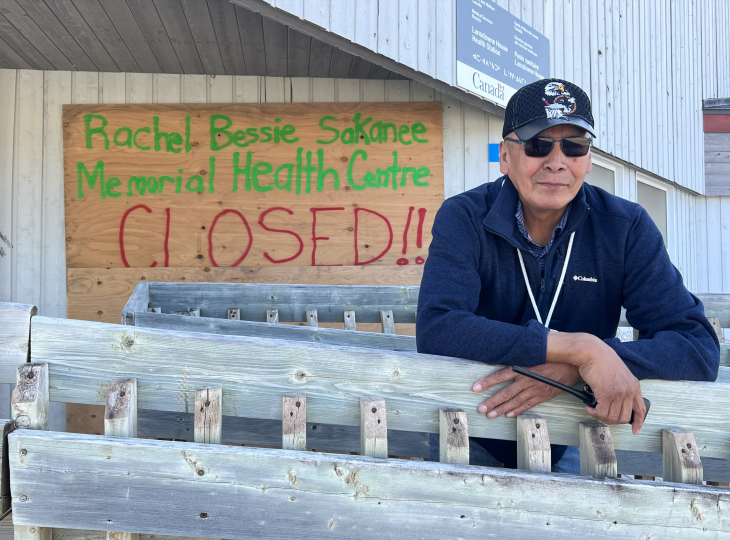
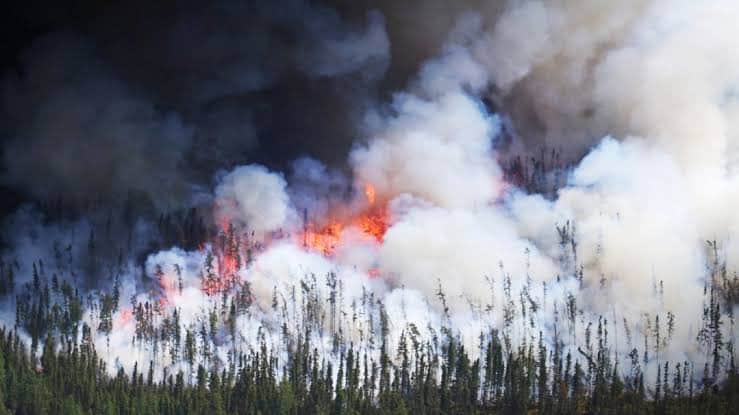
Editors’ note: Ricochet’s Jon Thompson has been working around the clock for the past week to collect and disseminate information on the raging forest fires sweeping through Northern Ontario.
As wildfires sweep across northern Ontario, this has increasingly become a story about the government response to those fires, and how they’ve failed to communicate with its victims and supported its first responders. On Saturday, Ricochet was the first to report on criticism from First Nations leaders who felt abandoned by the Ford government. This week, Thompson reported on the forest firefighters union and their criticism that the Ford government’s failure to prepare for the predictable has hamstrung the firefighting effort.
Yesterday, Thompson attended a press conference with First Nations leaders denouncing the Ford government’s failure to communicate with them. Ricochet will stay on this story and have more updates soon. In the meantime, we wanted to share this raw interview with Ontario NDP leader Marit Stiles following that press conference. Stay tuned to Ricochet and Jon’s social feeds for updates as he continues to chase every story fit to print about these fires. If you want to support his work, become a monthly donor here.
The following interview has been lightly edited for clarity and length:
RICOCHET: Marit Stiles, what is your response to what you just heard [at a press conference featuring First Nations leaders from across Northern Ontario]?
MARIT STILES: To hear what’s been going on here, and listen to the chiefs speak about what’s happening in their communities, and also the utter failure of the provincial government (and federal government frankly, too) to actually respond and to be prepared and to work with First Nations… It’s absolutely outrageous.
We’ve been calling — alongside the wildland firefighters for years now — we’ve all been calling for real investment, real resources. And what we see again and again is Doug Ford and his ministers come out and it’s just like political theater. There’s nothing, there’s no real commitment here. It was really disturbing to hear from First Nations leadership how utterly devastating this fire has been.
But I will say we also recognize the extraordinary work from all of those people on the front line who are fighting these fires right now, and all of the volunteers in communities like Thunder Bay — all those who are trying so hard to help support these families, these people. As the chiefs all mentioned today, particularly in those really harrowing stories, a lot of it is, local people saved themselves. They saved themselves. They may not have saved their communities, but they saved their First Nations. They saved their people.
You heard the chiefs here talk about the need for a public inquiry. I was calling for that yesterday. I don’t see how we can not do that. We’re going to focus right now on saving people and communities, and fighting those fires. And then we need to turn around and have a full public inquiry to see where things went wrong.
But in the meantime, I think that Doug Ford and his government’s treatment of First Nations and the communities that have been impacted here is actually reprehensible.
RICOCHET: What systemic issues do you want to see addressed in such an inquiry?
STILES: We know some of the solutions, right? We already know some of the solutions and the government should have acted on them years ago. We need to at least double the amount that we’re investing in wildfire prevention and programs. If we’d done that, we’d at least be in a better place right now, a little bit better prepared to fight these fires.
Doug Ford has been misleading the people of Ontario, saying that he has spent more than any other government in history. He says there’s 80 water bombers in the province of Ontario. That’s a lie. There are not 80 water bombers. People here know it. Those are just 80 planes in total that can carry water.
He needs to go to the experts, he needs to work with First Nations communities to make sure that this never happens again. Wildfires may be inevitable but we can be better prepared, and we can also start to address climate change more seriously and the impact that is having.
RICOCHET: [Nishnawbe Aski Grand Chief Alvin Fiddler] mentioned a 2021 firefighting document. Are you familiar with that document?
STILES: Yes, absolutely. Grand Chief Fiddler has mentioned this to me as well before, that he handed along that plan to the premier and the premier did nothing with it.
But I’ll tell you this: the fact that [Ford] would be given such an opportunity to do the right thing so many years ago, and then looked the other way and just ignored it, is outrageous and reprehensible.
I also think that the premier coming here, refusing to actually bring First Nations leaders along with him — to meet with him even — shows again, a deep disrespect and a failure to understand how important they are. Look, the communities that were impacted were largely First Nations, but any response to wildfire in northern Ontario has to have all leaders at the table.
And that includes First Nations leaders, it includes mayors, it includes everybody. And without the wildfire fighters at the table, you’re never going to come up with a plan that works.
RICOCHET: Doug Ford was meeting with ministry workers but I did not see any photos of him with evacuees. Is that unusual, in your experience?
STILES: It is. I’ve never heard of anything like it. You come to an area where people have been evacuated to, where you hear these, frankly heroic, stories, he should be meeting with the people who have been impacted. Any leader would do that. That’s why I’m here today: I have the privilege of getting to sit across from Doug Ford and ask the questions everybody else wishes they could ask. I’m here listening to evacuees all day, meeting with volunteers to thank them for what they’re doing. Where is the premier?
RICOCHET: And what are you gonna ask him on their behalf?
STILES: I’m going to ask him where the hell he is! Because right now the people of Ontario see our forests are burning, our communities are in ashes. We cannot respond to any other crises, economic or otherwise, if our communities are in ashes.
Jon Thompson is a Local Journalism Initiative reporter based in Thunder Bay. Contact him with tips and story ideas at Jon@ricochet.media.