Nova Moonias is only two weeks old but she has already flown home to Neskantaga First Nation following an evacuation, and five days later, she was evacuated again.
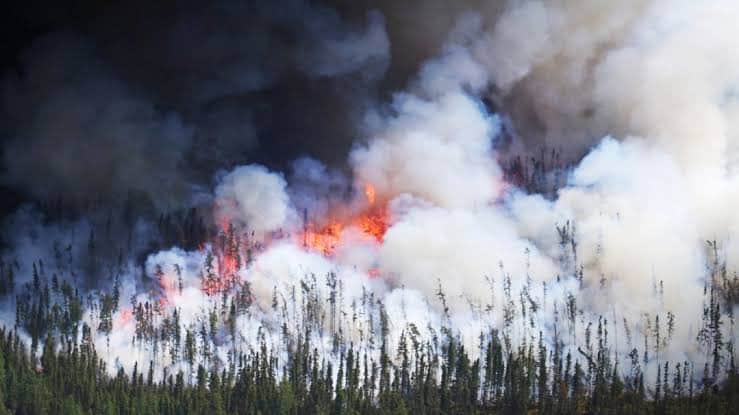
Nova’s mother Wanita was living in a Toronto hotel in July, after fleeing forest fires that threatened the northwestern Ontario fly-in community. The baby was expected on August 12, but medical professionals induced labour on July 28 so mother and child could fly back north with their family and neighbours.
The three-day-old became a symbol of hope in that moment; Neskantaga’s evacuees were returning home with one more member than had left. Five days later, following a sewage leak, Nova had to fly out again, and leaders say that short-lived hope has given way to concern over the mental health impacts of repeated evacuations.

“It’s kind of stressful,” Wanita said, from the same Toronto hotel she left less than a week earlier. “I have worries about our clinic. And the kids are really homesick already.”
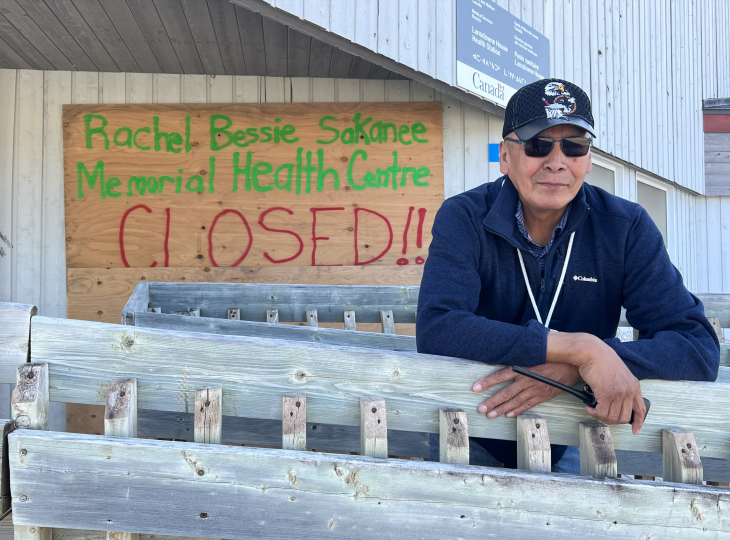
Wanita didn’t have time to ready a crib for Nova before the fire evacuation. Three days later she heard over the CB radio that a contractor working on the health centre had made an error and raw sewage was backing up into the basement. It would take Ontario two more days to arrange a second evacuation.
“It’s kind of stressful,” Wanita said, from the same Toronto hotel she left less than a week earlier.
“Especially hearing about the sewage and fuel leak, I was worried about my newborn,” Wanita said. “With the clinic, she missed one of her assessments she was supposed to have a few days after when she was born. I just wanted her to have all her assessments and tests done on time.”
Chief and council declared a state of emergency on August 4, and a call came in to prepare for evacuation again. Wanita prepared her four other children and the baby, leaving a fridge full of fresh food behind with what remained of her family’s summer.
Crisis after crisis
Two-thousand kilometres north of Toronto, the Neskantaga airport parking lot is full but the community is eerily empty.
Only six of the 25 people who stayed behind to maintain public works and basic infrastructure showed up for breakfast on Friday.
“We’re doing our best here, making sure it’s safe and the dogs are fed. It’s just dead quiet,” said 22-year-old Lazarus Shewabick, who has been conducting security patrols and keeping an eye out for forest fires while his partner and stepchildren are back in Toronto. “I know they don’t like leaving, they had no choice. The nursing station is the most critical infrastructure here in Neskantaga and [it isn’t safe for them to be here if] it’s not operating.”
Across the road, the clang from the loose latch on the band office door echoed into the empty streets. No one was at the front desk to answer the ringing phone. The lights were all out, except the one spilling into the hallway from the office with the only open door.
That was when the internet signal cut out on Neskantaga Chief Gary Quisess’s call with Indigenous Services Canada, and the update on Neskantaga’s second evacuation this month abruptly ended.

The chief is finding the silence deafening.
“The stress is silence. You don’t hear it until it attacks you,” Quisess said. “You’re always on alert. Something is going to happen. That’s trauma. But morale is OK. It all goes up and down, you know how mental health is.”
For the 300 people living on-reserve, the second evacuation was a replay of last spring, when a rapid snow melt resulted in the health centre basement flooding and an overwhelming smell of diesel fuel. There’s still water rotting in the facility’s basement walls. In other places, supporting beams show through where the drywall was cut a metre off the ground and left open a year ago. Indigenous Services Canada has yet to heed calls from the First Nation’s leaders to fund a planning stage for a new facility.
Quisess sees the health centre as the most urgent example in a generational infrastructure collapse. In the 1990s, Canada razed the old community at Lansdowne House trading post downriver and built Neskantaga First Nation nearby from scratch.
The water treatment plant has never provided potable water. It’s infamously known as the site of Canada’s longest boil-water advisory, standing at 11,514 days and counting.
“Life could have been really good but there’s a lot of negative impacts that have taken over. It’s sad to see our young people [in this state].”
The condition of the water plant and the health centre, plus the school, the skating rink, and other infrastructure prompted then-Ontario ombudsman Paul Dubé to call Neskantaga’s infrastructure “unacceptable and unsafe” during his office’s first-ever visit in October.
The water treatment plant has never provided potable water. It’s infamously known as the site of Canada’s longest boil-water advisory, standing at 11,514 days and counting.
The chief sees the polycrisis of infrastructure failure as compounding stress among his members, and says the psychological effects represent an epidemic. By his count, one person in every local household is taking suboxone daily as a long-term alternative to opioid addiction. That’s not counting those who are still using illicit drugs, and while some prevention programming for youth exists, there is no ongoing treatment beyond prescribing substitutes in perpetuity.
“Life could have been really good but there’s a lot of negative impacts that have taken over. It’s sad to see our young people [in this state]. I don’t know how anybody’s going to find a good job in the future if this doesn’t end. We have a brand-new precious baby’s life, and it’s impacted from the get-go [by the evacuation],” he said.
“People always have concerns about the water treatment. They’re ready for that one, because we’ve had two evacuations on that. Now, they’re concerned about the water distribution system, is that going to break? Now, it’s the health centre again.”
‘I’m at a loss for words’
In the middle of this abiding silence, a loud commotion arises. Eleven contractors from a new company were digging a trench around the health centre to limit the impacts of raw sewage in the sand. Over the course of the day they would sever the sewage pipe again, and cut the diesel line.

It’s Councillor Bradley Moonias’ job to report back to Quisess, so the chief can update governments in Toronto and Ottawa — whenever the signal comes back online. Everyone else who stayed behind reports to Moonias.
“I’m at a loss for words,” Moonias said. “It’s got to be cleaned up. The walls all have to be changed. The sand has to be cleared. We need long-term solutions.”
Moonias said by the time Ontario mobilized for the second evacuation, two other fires were burning near Neskantaga.
He recalled the panic of mid-July, when forest fires consuming the land drew nearer, and Ontario was unable to send aircraft for evacuation. The smoke became so thick that it prohibited planes from taking off and landing. Members didn’t know if governments would take action soon enough for them to escape. In the end, the Canadian Armed Forces led an emergency evacuation.
Moonias opted not to tell evacuees about those new fires. So while four loaded planes flew out in one day last week, provincial crews fought a two-hectare fire from the ground just out of their sight, and out of mind.
“I just have a lot of worries about what’s going to happen, and when we’re going to get to go home. This is really sad, that this is happening to us.”
“It was happening all at once,” Moonias said. “We didn’t tell anybody in the community there was a fire close by, because we didn’t want to alarm everybody. It’s sad enough they know their clinic is down, for the people who come here on a day-to-day basis, but what are you going to do when you’re a leader? Tell them there’s a fire 10 kilometres away while the clinic is down and they have to evacuate? No, you don’t panic. You make arrangements. You advocate for your people.”
Nurses with Indigenous Services Canada have established a temporary health outpost in a trailer home. They wouldn’t speak with media, but a statement from ISC says Ornge air ambulance services are available, if needed — as is financial support.
“Jointly, we will continue to assist the Nation as the situation evolves,” the statement reads.

Back at the hotel near Toronto Pearson Airport, where evacuees are staying, the activities that distracted children during Neskantaga’s first evacuation have lost their lustre. A few families ventured out to find a splash pad on Sunday, but Wanita said her children stayed behind.
Neskantaga’s annual festival was to have begun on August 17, followed by a youth retreat. Chief and council have cancelled those events, and they’re growing concerned that students may not be able to return to school on time in September.
Wanita’s less worried about baby Nova than her two teenagers, who she says are growing increasingly isolated. She noticed the effects of last summer’s evacuation on them, and is seeing similar effects already becoming visible.
“They’re upset about the things that have been cancelled. They were looking forward to the festival and the retreat. They’re spending their summer break in a hotel,” she said. “When this happens, it just kind of messes with their mental health. They get homesick and then upset and they lose interest in wanting to do things like go out or participate in activities.
“I just have a lot of worries about what’s going to happen, and when we’re going to get to go home. This is really sad, that this is happening to us.”
Jon Thompson is a Local Journalism Initiative reporter based in Thunder Bay. Contact him with tips and story ideas at Jon@ricochet.media.